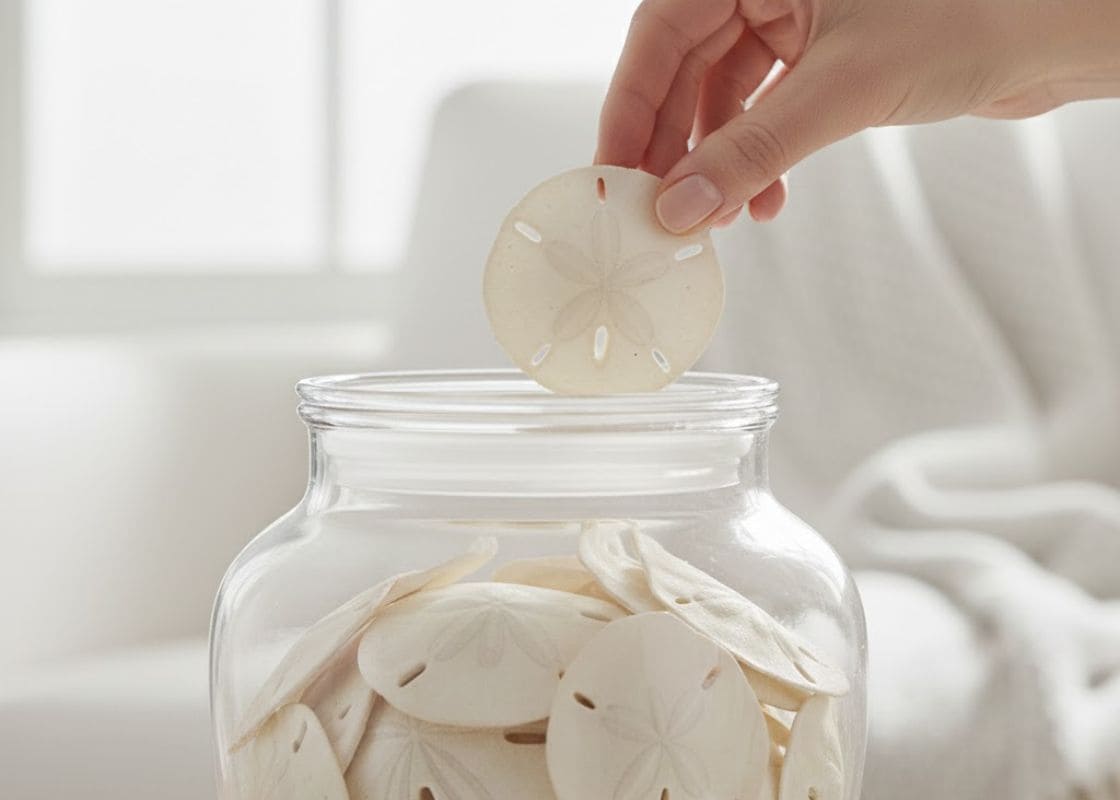
There is a glass jar on my coffee table that people notice almost immediately when they sit down, not because it is large or decorative in an obvious way, but because it feels slightly unexpected, a simple container filled with pale, fragile shapes that seem to carry more weight than their size suggests.
Inside are sand dollars I have collected slowly over time, never all at once, never with a plan, but always with care, each one placed there after a walk, a pause, or a moment when I felt present enough to notice what the shore was offering.
I did not start collecting sand dollars intentionally. Like many things in my home, it happened gradually, one piece at a time, until one day I realized the jar was no longer empty, and the habit had quietly become a ritual.
Why Sand Dollars Stay on My Coffee Table
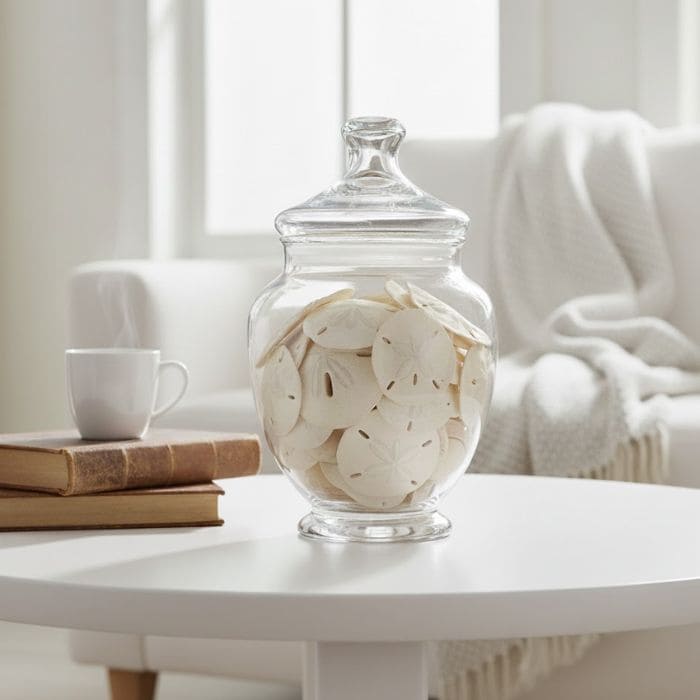
I keep the jar on the coffee table because it is the place where life happens most naturally, where coffee cools too quickly, books get stacked and unstacked, conversations drift, and quiet afternoons stretch longer than planned.
The sand dollars live there not as decoration, but as something to notice when your eyes wander, something that invites a slower glance.
Their color is soft, somewhere between off-white and pale gray, and their surface carries a faint texture that reminds me how delicate they are, how easily they could have broken before making it home.
When light hits them in the afternoon, especially on overcast Washington days, they seem to glow slightly, as if holding onto a bit of the beach that shaped them.
The Meaning and Symbolism Behind Sand Dollars
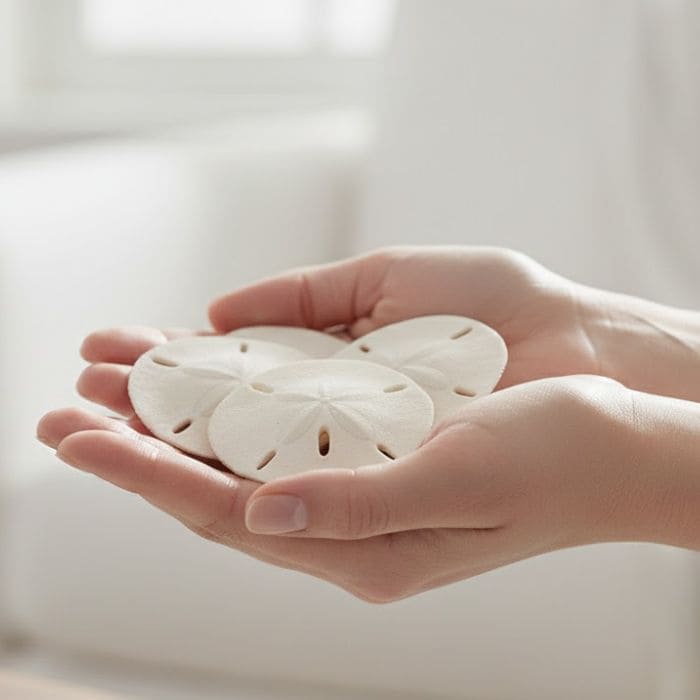
Over time, I became curious about why sand dollars have always felt special, even before I knew much about them.
In many traditions, sand dollars are symbols of peace, hope, and transformation, often associated with spiritual meanings tied to resilience and renewal.
Their five-pointed star pattern, visible when you look closely, has been interpreted as a symbol of guidance and protection, while their round shape suggests wholeness and continuity.
Some people associate sand dollars with faith and quiet miracles, especially because they are rarely found intact, making each complete one feel like a small gift rather than something expected.
I like that idea, that they represent what survives gentle pressure rather than force, what remains after waves and time have done their work.
For me, sand dollars have come to symbolize patience and attentiveness, the idea that you find meaningful things not by searching aggressively, but by walking slowly enough to notice them.
Do You Ever Use Sand Dollars, or Do You Just Collect Them?
I often wonder how other people interact with sand dollars when they find them.
Do you display them carefully on a shelf, tuck them away in a drawer, turn them into ornaments, or simply return them to the shore after a moment of admiration? Or do you hold onto them the way I do, letting them live quietly among everyday objects?
That question comes to mind often when I rearrange the jar or add a new piece, because sand dollars feel like objects that ask for intention, even if that intention is simply appreciation.
How I Use Sand Dollars in My Home
Beyond keeping them in a jar on the coffee table, I have found a few gentle ways to let sand dollars exist in my space without turning them into something overly styled or fragile.
Sometimes I remove one or two and place them on a stack of books, where their soft shape contrasts with the sharp edges of paper and covers, creating a balance that feels calm rather than decorative.
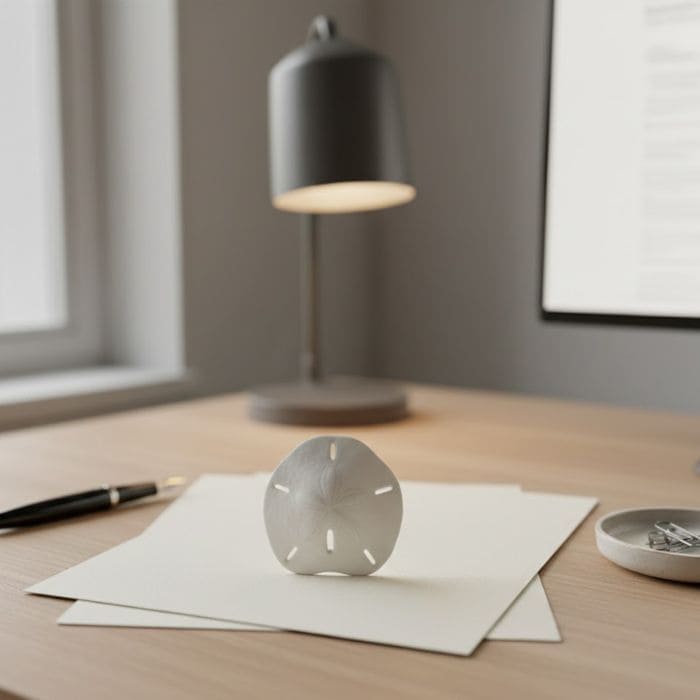
At other times, I use a single sand dollar as a paperweight on my desk, not because it is heavy enough to be practical, but because it slows me down, reminding me to move carefully, to treat my workspace with the same attentiveness I used to pick it up from the shore.
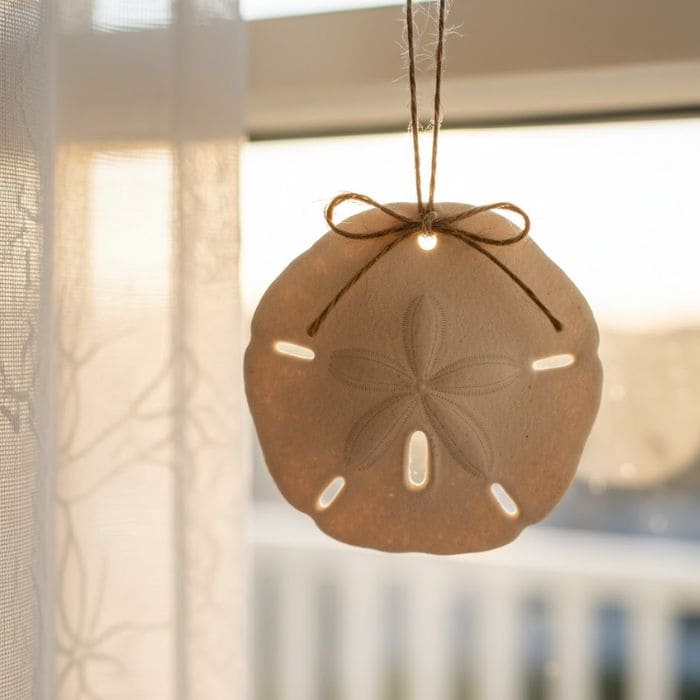
During certain seasons, especially late summer and early fall, I have tied a thin piece of twine around a sand dollar and hung it briefly near a window, letting light pass through its subtle openings, knowing that it will return to the jar once the season shifts again.
I like that nothing about this use feels permanent, because sand dollars themselves feel temporary, fragile, and time-bound.
I Avoid Turning Them Into Permanent Decor
I have seen sand dollars painted, sealed, glued, and transformed into crafts, and while I understand the appeal, I choose not to do that with mine.
Part of what makes sand dollars meaningful to me is their vulnerability, the fact that they can chip or crack if handled carelessly, reminding me that not everything needs to be preserved forever to matter.
Leaving them unaltered feels like a form of respect, a way of letting them remain what they are rather than forcing them into a role they were never meant to play.
What the Jar Has Taught Me Over Time
The jar of sand dollars has become more than a collection. It is a quiet record of walks taken, thoughts left unspoken, and moments when I chose to slow down instead of rushing past what was in front of me.
It sits there without demanding attention, yet it always offers something when I pause long enough to look.
In a home filled with wood, handmade pieces, and objects that carry memory, the sand dollars feel like a natural extension of that story, reminding me that some of the most meaningful things we bring home are not bought or planned, but simply noticed.
A Gentle Invitation to Look Again
If you ever find yourself walking along a beach and spotting a sand dollar half-buried in the sand, I hope you pause for a moment, whether you pick it up or leave it behind.
These small, fragile objects carry more than their shape suggests, and how you choose to interact with them says something about how you move through the world.
So I will ask you again, quietly this time, do you collect sand dollars, display them, use them, or simply admire them and walk on?
For me, they live in a jar on my coffee table, holding the memory of the shore, and that feels exactly right.