There was a corner in my bedroom that kept asking for something. It was about 60 cm wide, tucked between the window and the wall, with nothing in it except light in the morning and shadow at night. I stared at it for weeks, thinking it needed a chair, then a plant, then maybe nothing at all.
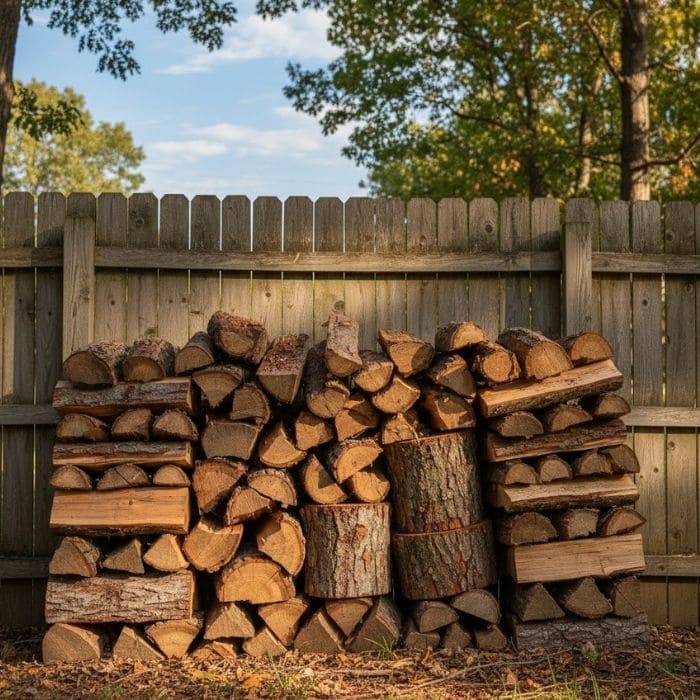
One afternoon, while walking through my backyard garden, I noticed a small pile of wood logs stacked near the fence.
They came from an old fruit tree branch we trimmed last winter. That was the moment the idea finally settled. Why not make a bookshelf myself, right here at home, using what I already had?
The Wood Came From My Own Backyard
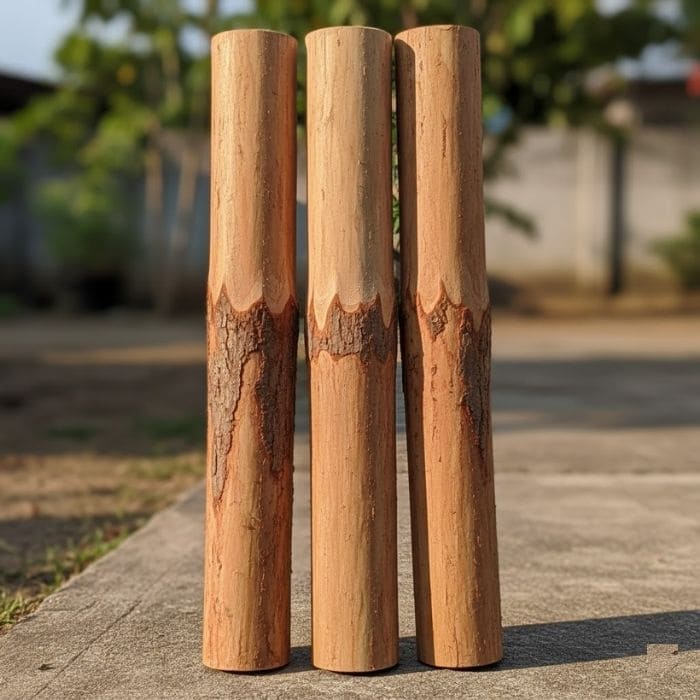
All the logs I used came from my garden. Most of them were from a guava tree branch that had fallen during a storm. I had kept the wood because it felt wasteful to throw it away.
Each log was between 90 and 120 cm tall, with a diameter of about 8 to 12 cm. I chose four main logs to act as vertical supports.
I cleaned them with a stiff brush and water, then let them dry outside for nearly two weeks. I did not strip off all the bark. I only removed the loose pieces that would flake later.
After that, I lightly sanded the areas where hands might touch, especially around the top and middle. The goal was safe wood.
Planning the Shelf Without a Blueprint
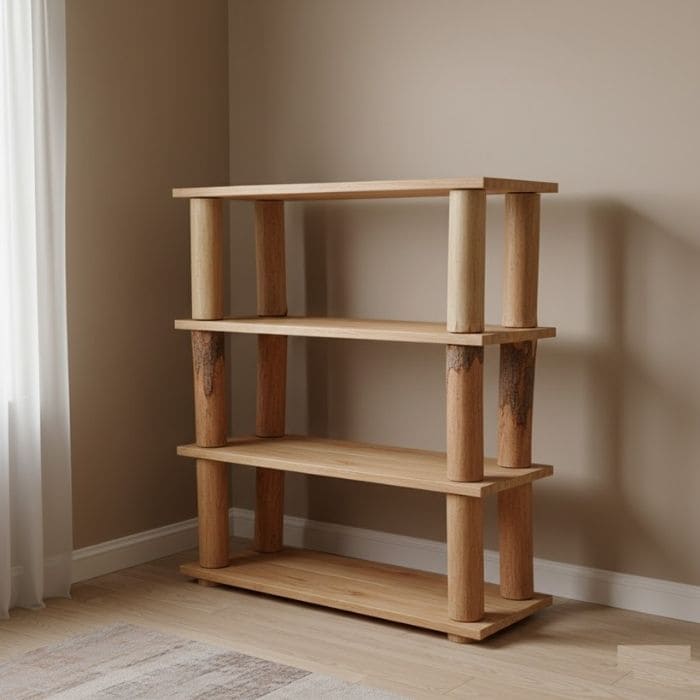
I did not draw a plan. Instead, I measured the corner of my bedroom carefully. The final bookshelf needed to be no wider than 55 cm and no deeper than 25 cm so it would not crowd the space.
I decided on three shelves, which felt right for the height and for the number of books I actually use.
For the shelves, I used three wooden planks, each about 55 cm long, 22 cm deep, and 2 cm thick.
I placed the bottom shelf 25 cm from the floor, the second shelf at about 55 cm, and the top shelf just under 90 cm. That spacing allowed room for tall books, smaller novels, and a few personal objects.
Before fixing anything permanently, I stood the logs upright in the corner and balanced the planks across them.
I moved them again and again until the whole structure felt steady. One log leaned slightly inward. Instead of correcting it, I kept it. That small lean made the shelf feel grounded, not stiff.
Putting It Together Slowly
I secured the shelves using wood screws drilled directly into the logs. I pre-drilled every hole to avoid splitting the wood.
I checked the level after each shelf, then checked it again by placing books on top to test the weight. The finished shelf stands about 110 cm tall and feels surprisingly solid.
The entire build took one afternoon, not counting drying time. I worked slowly, stopping often to step back and look. That pause mattered more than speed.
Bringing It Into the Bedroom
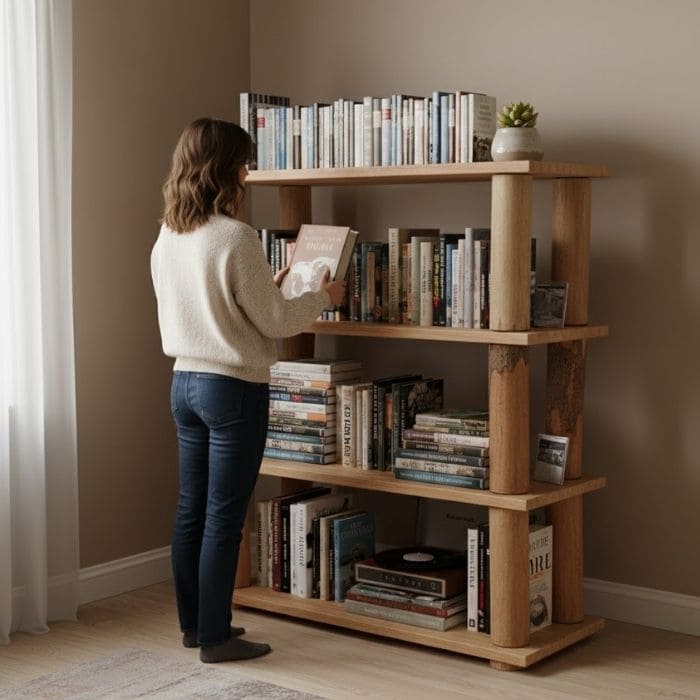
Once finished, I moved the bookshelf into its corner. The logs looked different indoors. The wood felt warmer, softer, almost calmer.
Sunlight from the window caught the uneven bark in the morning, and at night the shadows made it feel like part of the room rather than furniture added to it.
I did not fill it all at once. I placed seven books on the bottom shelf, five on the middle, and left the top shelf mostly open with a small lamp and a trailing plant. Empty space was part of the design.