Recently, I noticed that my evenings were becoming noisier than I liked, not in sound, but in movement, with my hands constantly reaching for my phone even when my mind wanted rest, and it was during one of those evenings that knitting found me almost by accident.
I had started following a woman on Instagram whose entire page felt like a slow inhale, because instead of dramatic transformations, she showed how knitting could soften a corner of a room, warm a forgotten chair, or bring life to a space that had always felt unfinished.
What stayed with me was not her skill level, which was far beyond mine, but the way she treated knitting as a language for space, a way to let patience and texture speak where furniture and paint could not.
And even though I knew I could not recreate her work exactly, the idea that I could gently transform my own home stayed with me long after I closed the app.
Choosing Small Corners Instead of Big Statements
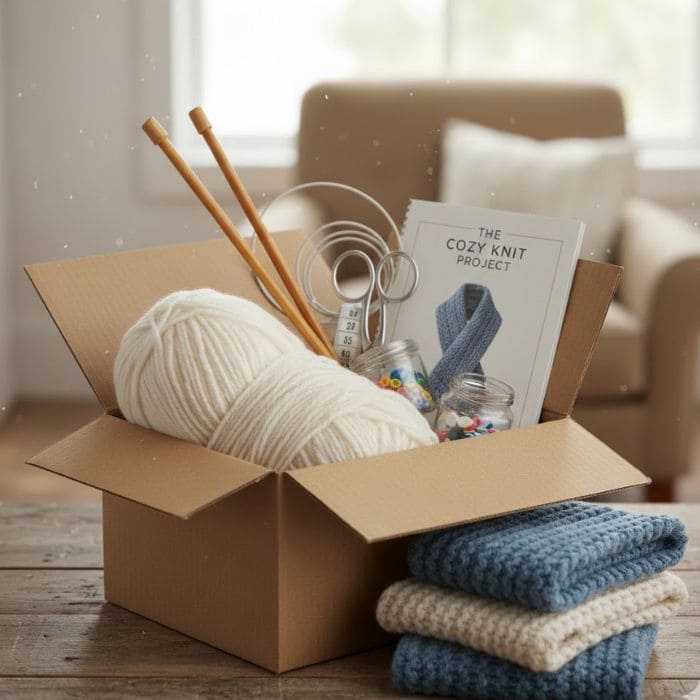
From the beginning, I knew I did not want knitting to become another ambitious project that lived half-finished in a drawer, so I decided to focus on small corners of my home, spaces that already existed but felt slightly cold or temporary.
This decision made everything feel lighter, because small projects allow for learning, mistakes, and pride without the pressure of scale, and they fit naturally into the rhythm of my days.
Each project found its own timeline, shaped by evenings when I had energy and others when I only managed a few stitches before setting the needles down.
Knitted Curtains for My Small Bathroom
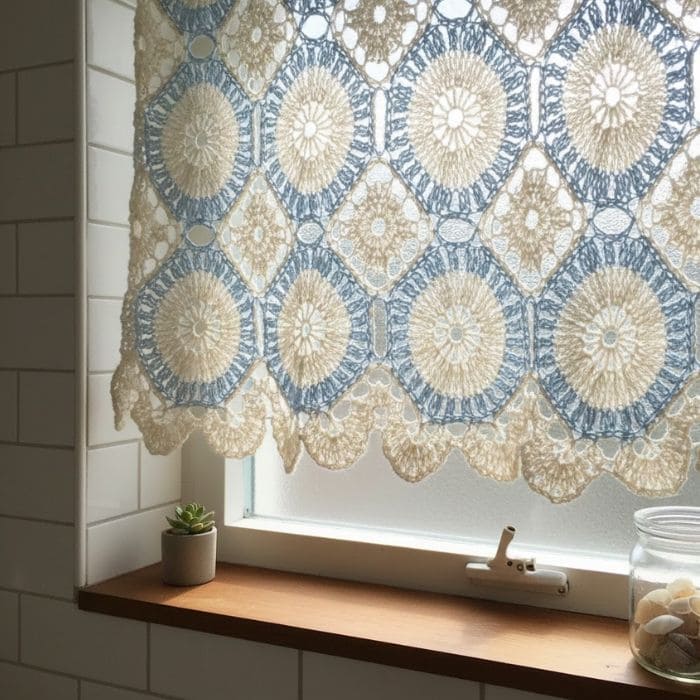
The first project that truly changed how I saw knitting was a set of simple knitted curtains for my small bathroom, a room that had always felt purely functional, clean but slightly impersonal, like a place meant to be passed through rather than lived in.
I chose a soft, light-colored yarn that allowed daylight to pass through while still creating privacy, and I worked with an open stitch pattern so the fabric could breathe rather than block the space.
It took me nearly two weeks to finish, knitting a little each night, sometimes only a few rows before stopping, other nights losing track of time entirely, and when I finally hung the curtains, the difference was immediate.
The light softened, the room felt warmer, and what surprised me most was how something handmade made the bathroom feel less temporary, almost as if it belonged to me in a deeper way.
Every time I see those curtains now, I remember the quiet evenings spent making them, and that memory has become part of the room itself.
Coasters That Slowly Built My Confidence
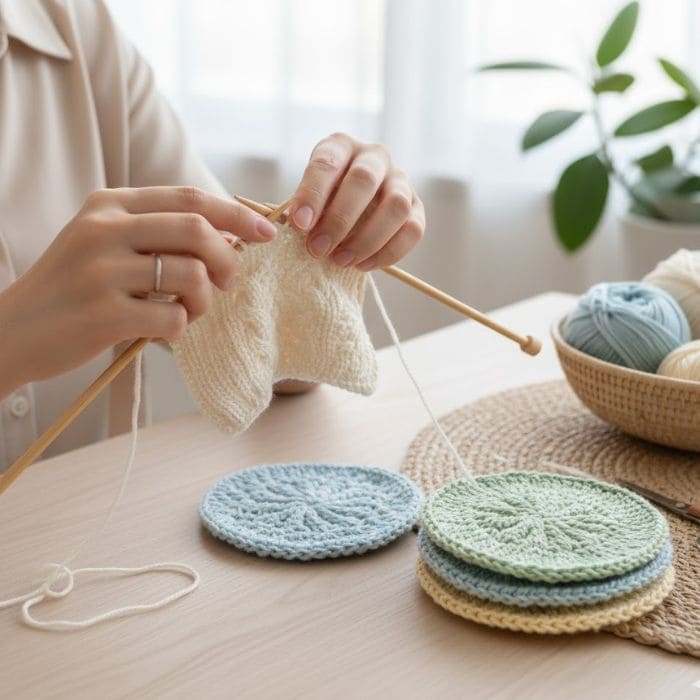
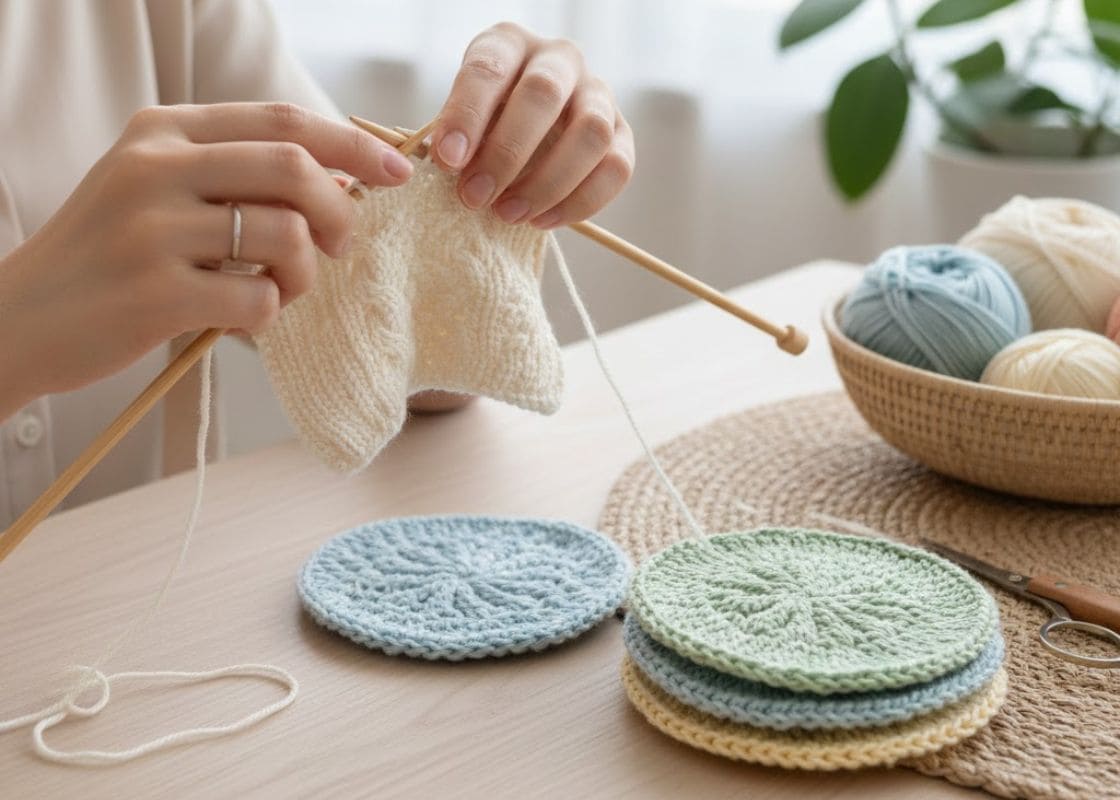
After the curtains, I moved on to knitting coasters, partly because they felt practical and partly because they allowed me to focus on consistency in a smaller format.
Each coaster took about an hour to complete, but learning how to keep the tension even took much longer, and I remember pulling out rows repeatedly, reminding myself that mistakes are not failures, just part of learning something with your hands.
I experimented with thickness, realizing that slightly tighter stitches made the coasters sturdier and more absorbent, and by the time I finished a small set, I could see my progress clearly, not just in the finished pieces, but in how confidently my hands moved.
Now they live quietly on my coffee table, used every day, catching spills and heat without fuss, and each time I place a cup down, there is a small, private satisfaction in knowing they were made slowly, one stitch at a time.
The First Pair of Socks That Taught Me Patience
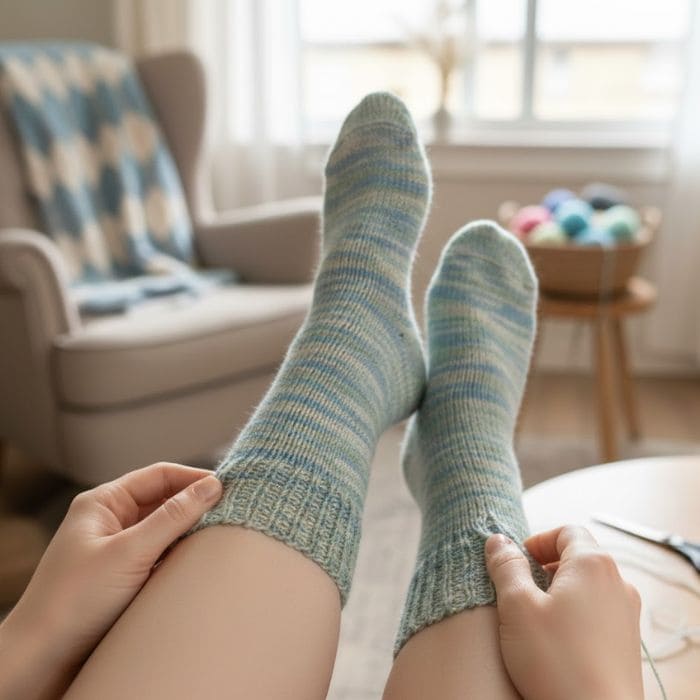
Knitting socks felt intimidating from the start, because socks require shape, structure, and fit, and there is very little room to hide mistakes, but that challenge was exactly what drew me in.
I chose a soft but durable yarn, imagining how it would feel against my skin, and worked on the socks over nearly three weeks, knitting during short breaks, quiet evenings, and one long Sunday afternoon when I refused to stop until the heel finally made sense.
The moment I pulled them on for the first time was unexpectedly emotional, because they were not perfect, slightly uneven in places, but warm, soft, and undeniably mine, and wearing something handmade shifted how I think about clothing entirely.
Those socks carry time inside them, and every time I wear them, I remember the patience it took to finish something that could not be rushed.
Why Knitting Feels Different From Other Creative Hobbies
Unlike many creative hobbies, knitting does not require a clear vision before you begin, and that flexibility is what keeps me coming back.
You can start with a vague idea, allow it to change as you go, and still arrive at something meaningful, which mirrors how I want to approach more areas of my life, open to process rather than fixed outcomes.
Knitted pieces also age with you, softening, stretching, and adapting, rather than staying frozen in their original state, and that sense of quiet evolution feels deeply human.