Last week I drove out for my friend’s graduation, and I knew it would be a big day for her, but I still did not expect how emotional it would feel in real time, sitting in a room full of families and friends, watching people stand up with that particular mix of relief and joy that only shows up after years of hard work.
She graduated with her MBA from the University of Maryland’s Robert H. Smith School of Business, and the whole ceremony had that polished, celebratory energy, the kind that makes you straighten your posture without realizing it, because everyone there is witnessing something that cost real effort.
I remember the small details more than the dramatic ones, the way she kept adjusting her cap right before her name was called, the way she looked around for familiar faces afterward.
Plus, she exhaled when it was finally done, as if she had been holding her breath for months and only just remembered she could relax.
The Bouquet She Handed Me
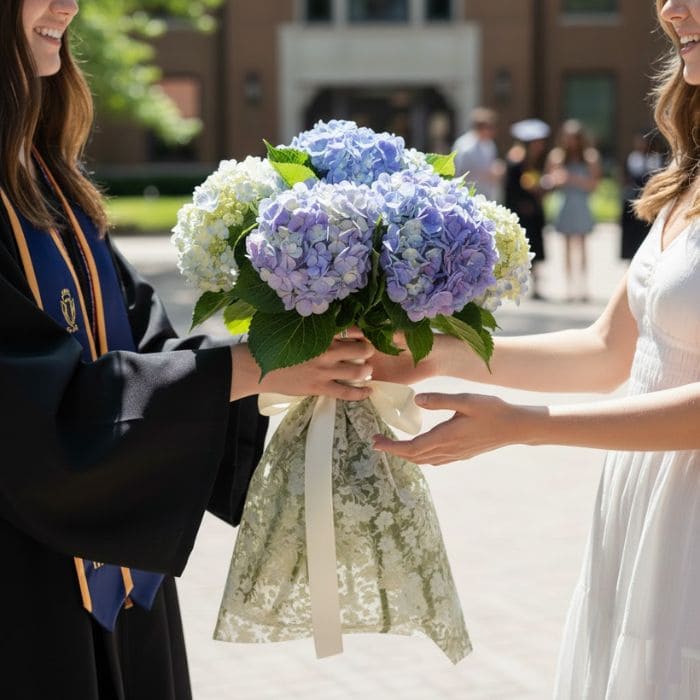
After the ceremony, it felt like the entire campus was made of flowers. People were carrying bouquets almost as big as their torsos, ribbons everywhere, hands full, arms full, and every time someone hugged, petals brushed against sleeves.
When we finally found a quieter spot to talk, my friend handed me a large bouquet with an easy smile and said, “Please take these, I don’t want them to go to waste,” and I laughed because it was so her, practical even on a day that could have been purely sentimental.
The bouquet was heavy in the way fresh flowers can be, damp stems wrapped in paper, and the hydrangeas were the first thing I noticed because they were huge and full, the kind of blooms that look like they’ve been assembled from dozens of tiny paper petals.
When I got home, I unwrapped everything carefully on my kitchen counter, trimmed the stems, and placed the bouquet in a tall glass vase I usually use for branches, partly because it was the only thing wide enough to hold it without crushing the blooms.
Two Days of Watching Them Change
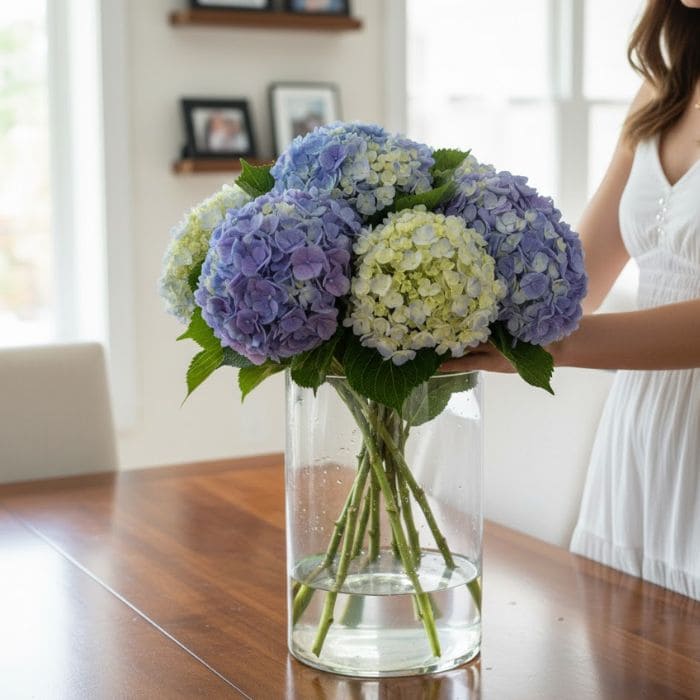
For the first day, the flowers looked almost identical to how they looked in her hands, upright, bright, slightly dramatic.
On the second day, I started noticing the quieter shifts, the petals softening at the edges, the way the blooms relaxed and widened, the faint change in color that happens when hydrangeas begin to settle into their next phase.
I kept walking past the vase, sometimes stopping for no reason other than to look, because the bouquet made the room feel different, like it held a little of the graduation atmosphere inside it.
By the end of day two, I realized I didn’t want to wait until the flowers wilted and ended up in the trash, because that felt too blunt for something that had carried such a meaningful day.
I counted the hydrangeas and realized there were six large blooms, not small ones, but the kind that fill your palm and then spill over it, each one sturdy enough to be preserved if I handled it gently.
That was when the idea came, quietly and clearly, the way good ideas usually do in my house.
Why Hydrangeas Felt Like the Right Flower to Keep
Hydrangeas have always felt symbolic to me, not in a dramatic, poetic way, but in a very practical way, because they are made of many small parts that hold together as one.
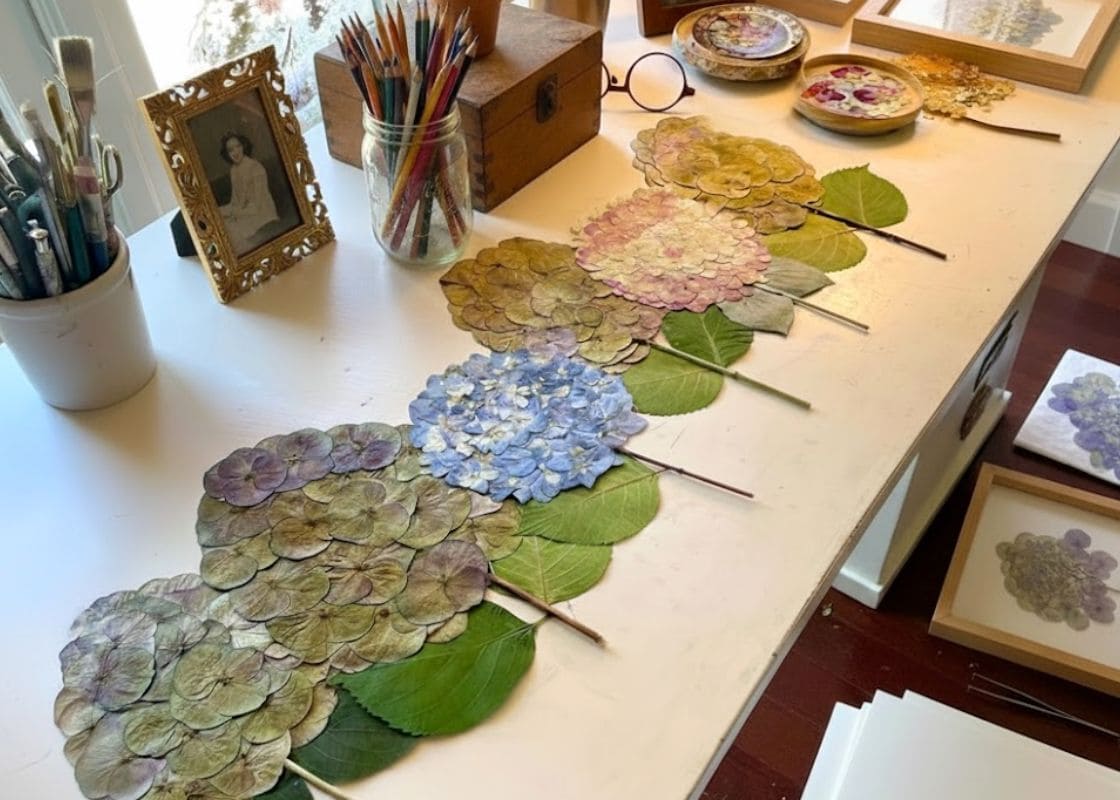
Their structure makes them surprisingly good for pressing too, because even when you separate them, the petals keep their character, and once dry, they still look like themselves, just quieter.
I also liked the idea that these flowers would not just be pretty, but would become a physical reminder of her achievement, something I could place in a frame or tuck into a journal.
What I Did Before Pressing, So They Wouldn’t Mold
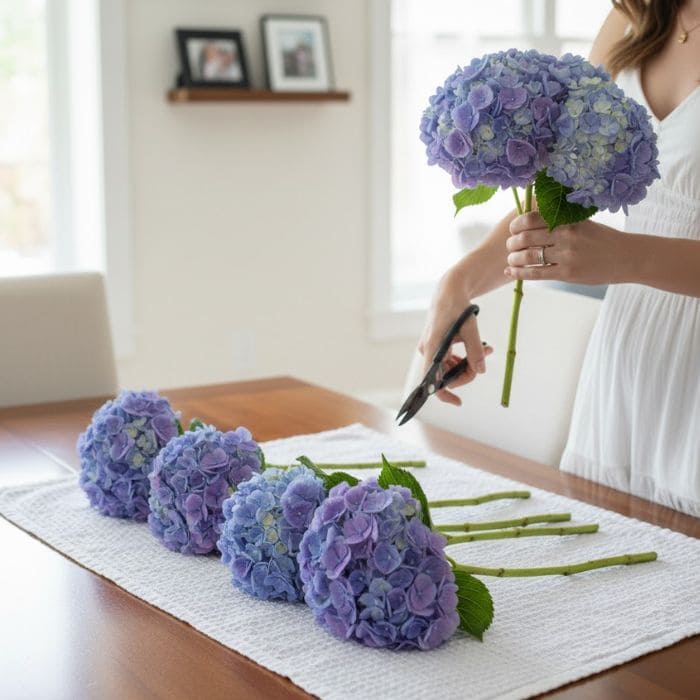
I didn’t press them straight from the vase, because hydrangeas hold water in a way that can turn pressing into a mess if you rush it.
I took the six blooms out one at a time, shook off excess water gently, and laid them on a clean kitchen towel for a few hours so surface moisture could evaporate.
While they rested, I trimmed the stems down to about two inches, mostly so the blooms could lie flatter, and then I started separating each hydrangea head into smaller, pressable sections.
If you have ever held a hydrangea bloom up close, you know it’s not one flower, it’s a cluster, so I treated each bloom like a collection rather than a single piece.
For each bloom, I created about three to four flatter sections, removing bulky parts and keeping the most intact petals, because overlapping petals trap moisture and cause browning.
The Pressing Setup With Real Weight That Actually Works
I pressed my hydrangeas using the method I come back to whenever I want results that feel clean and frame-worthy, because it uses things I already own and doesn’t require fancy tools.
I laid out plain absorbent paper first, then added a layer of parchment paper as a barrier, because hydrangeas can leave moisture marks and I didn’t want to ruin the pages of my books.
For each section of bloom, I placed it between two sheets of absorbent paper, gently spreading petals so they didn’t overlap too heavily, then sandwiched everything inside a heavy book.
The book I used first was an old hardcover cookbook I almost never cook from anymore, the kind with thick pages and a stiff spine, because it distributes pressure evenly instead of bending around the flowers.
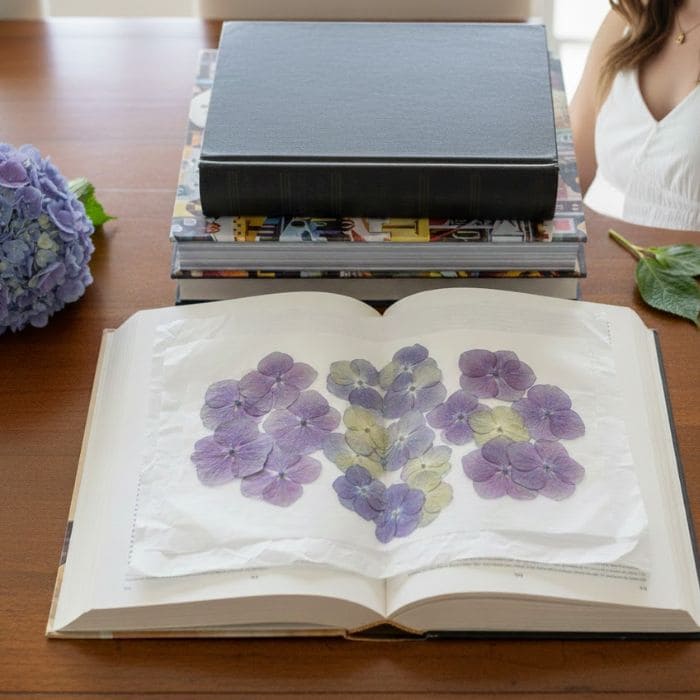
Then came the part that made the biggest difference, adding real weight on top.
I stacked two more thick books on top of the first, one of them a large home design book with glossy pages, and the other a hardcover novel that is so thick it can double as a doorstop.
If I had to estimate, the weight on top was probably 10 to 15 pounds total, heavy enough to flatten the blooms evenly, but not so heavy that it crushed the petals into fragments.
I placed the whole stack on a low shelf where I wouldn’t disturb it, because the biggest mistake is pressing flowers and then constantly moving them around, shifting weight, shifting alignment, and breaking the fragile drying process.
How Long I Waited, and the Small Checks That Kept It From Going Wrong
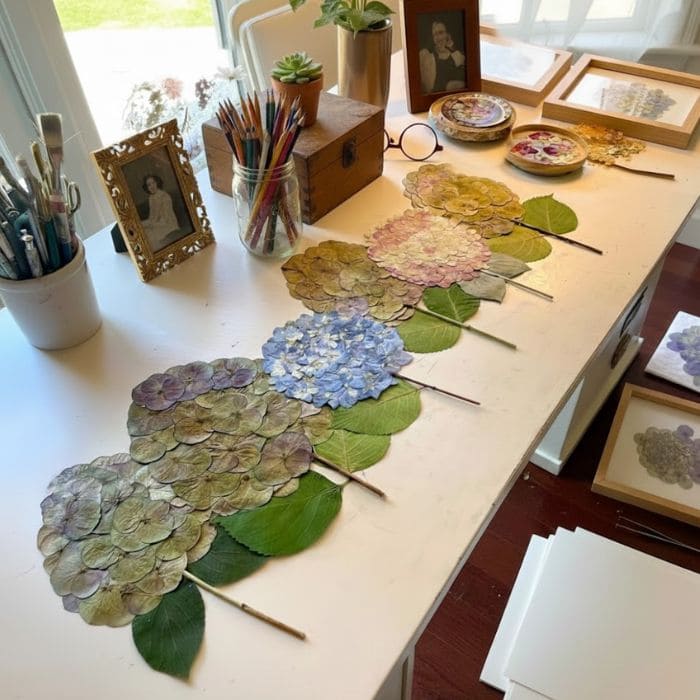
I left the flowers alone for the first five days, because opening the book too early adds moisture back into the process and can warp petals.
After five days, I lifted the top weights carefully, opened the book slowly, and checked the paper for dampness.
If it felt even slightly moist, I replaced the absorbent sheets with fresh ones, then closed everything back up and returned the weight.
From there, I checked every four to five days, and the entire process took about two weeks before the hydrangea sections felt fully dry, light, and stable, the way pressed flowers should feel when they’re ready to be handled.
The colors softened, which I expected. The petals became more muted, less bright than day one, but still beautiful, and honestly, that softening felt right, because memory does that too, it doesn’t stay loud, it becomes gentler, but it remains.
What These Six Hydrangeas Mean to Me Now
Now that the hydrangeas are pressed, they feel like something more than decor. They feel like a quiet record of a day I was proud to witness, the kind of day you don’t want to reduce to a single photograph.
Soon I’ll decide how to display them, maybe in a simple frame near my desk, or tucked into a notebook where I keep pieces of life that matter, but for now I’m just glad I didn’t let them fade without trying.