I didn’t start with a big creative goal that day, and honestly, that was the point.
I had been moving from one project to another for weeks, always finishing something, always thinking about what came next, and suddenly I wanted to make something that didn’t need to be useful, perfect, or impressive.
Air-dry clay felt like the right material for that moment because it doesn’t rush you and it doesn’t demand special tools, heat, or timing, only your hands and a bit of patience.
I opened the package without a sketch or plan, just the idea that I wanted to make something small enough to finish in one sitting, something I could live with rather than display.
Deciding on One Simple Project: A Catch-All Tray
After touching the clay for a few minutes, rolling it between my palms and pressing my thumbs into it, I realized I naturally kept flattening it into a soft circle, and instead of fighting that instinct, I followed it.
That was how the idea of a small catch-all tray appeared, not as a design decision, but as a shape my hands kept returning to.
I liked the thought of making a tray because it felt quietly practical, a place for rings, coins, or keys, something that would actually be used, not stored away, and that made the project feel grounded instead of decorative.
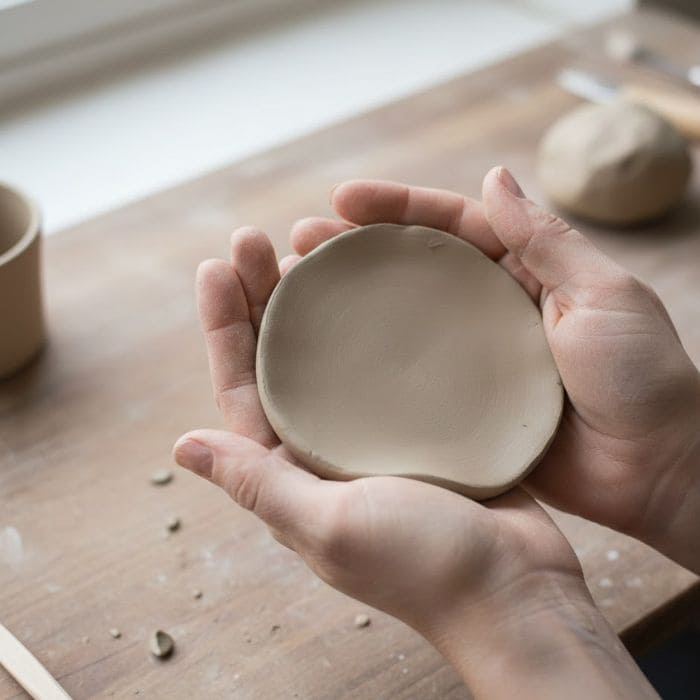
I rolled the clay out gently on the table using my palms rather than a rolling pin, because I wanted the thickness to feel organic instead of precise.
Once it was flattened, I lifted the edges slightly, pinching and smoothing them upward to create shallow walls, letting them rise unevenly instead of forcing symmetry.
I worked slowly, turning the piece as I went, smoothing cracks with a damp finger, pressing out rough spots, and leaving subtle fingerprints behind because I liked seeing evidence of the process.
The tray didn’t become perfectly round, and I didn’t correct it, because that softness made it feel more human.
Letting the Tray Rest and Dry Naturally
When the shape felt finished, I placed the tray on a flat surface and let it rest, resisting the urge to adjust it every few minutes.
Air-dry clay changes gradually, and I noticed that after a few hours, the surface had already begun to firm up, holding its form more confidently.
I left it to dry for a full two days, turning it gently after the first day so the bottom could dry evenly, and during that time, I found myself checking on it the way you check on something growing, not to interfere, but to witness.
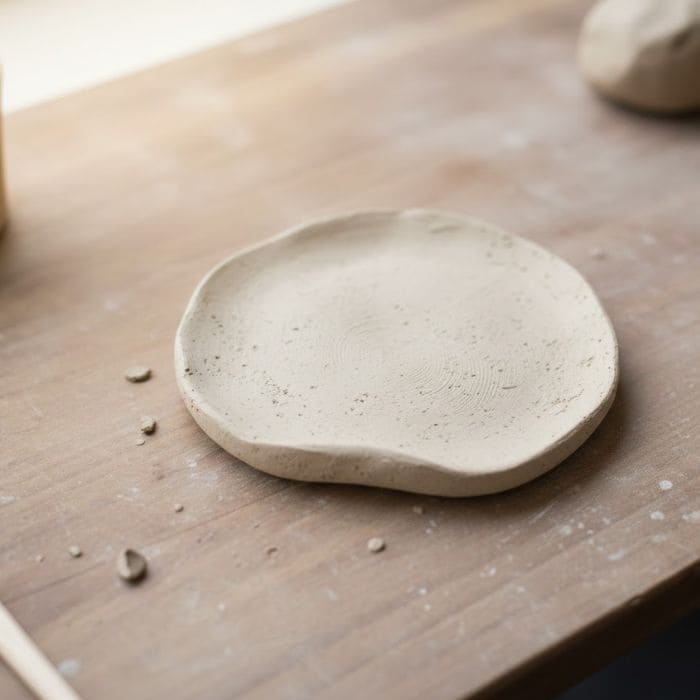
Once fully dry, the tray felt lighter than I expected, matte and slightly porous, with edges that were firm but not sharp.
The fingerprints were still there, the slight unevenness still visible, and instead of seeing flaws, I saw time, the quiet afternoon, the slow movements, the absence of pressure.
It didn’t look like something from a store, and that difference made it feel more valuable to me.
Why I Chose Not to Paint or Seal It
I considered painting the tray or sealing it with a finish, but every time I imagined doing so, it felt unnecessary.
The natural color suited my space, and the raw surface felt honest, like the tray knew exactly what it was without decoration.
I decided to keep it as it was, letting it age naturally and accept small marks over time, because I wanted it to feel lived-in rather than preserved.
How I Use It Now, Every Day
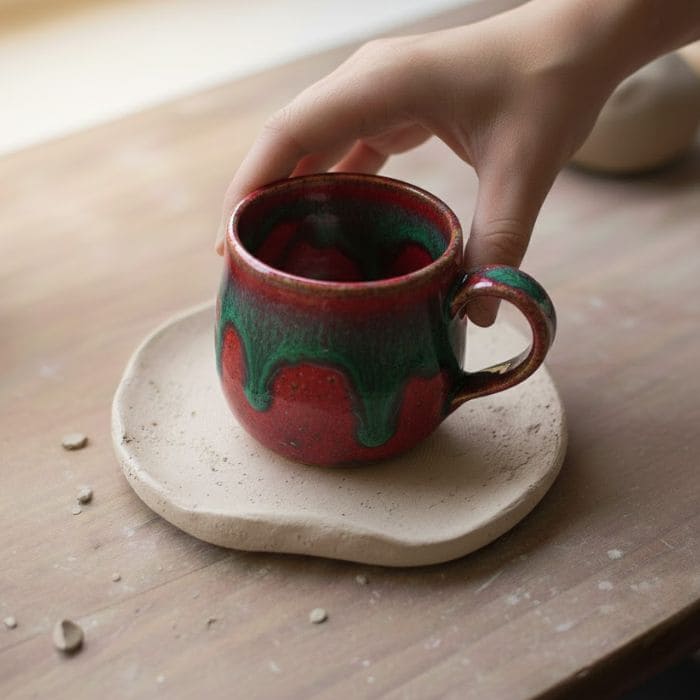
The tray now sits on my bedside table, holding rings I take off at night, a watch, and the occasional coin that ends up in my pocket during the day.
I touch it without thinking, and that familiarity is what makes it meaningful, because it has quietly become part of my routine rather than a finished project.
Every time I place something in it, I remember how little effort it took to make something that fits so naturally into my life.