If you have been following my recent posts, you probably already know that seashells are not just decorative objects in my home, but quiet markers of time, collected slowly through beach walks, pauses, and moments when I needed something grounding.
Over the past months, I found ways to live with them that felt natural, mostly through jars and bowls placed around the house, and for a while that rhythm felt complete, as if the collection had settled into its final form.
I truly believed I had reached that point, until one small, ordinary moment shifted the story again.

It was early in the morning when the doorbell rang, early enough that I hesitated before opening it, still half in the quiet of the day.
Standing outside was a woman I recognized vaguely, someone who had moved into the neighborhood recently and was still learning faces and routines.
She smiled in a slightly careful way and explained that she wanted to introduce herself properly instead of just waving from a distance.
In her hands, she held a small glass jar tied with twine, and when she passed it to me, I laughed softly, not out of surprise but out of timing, because inside was a collection of seashells.
I thanked her genuinely, because the kindness behind the gesture mattered far more than the object itself, and after a short conversation about the area and the beach nearby, she left me standing in the doorway holding the jar and feeling oddly lucky.
Why Another Jar Did Not Feel Right
When I brought the jar inside and placed it on the counter beside two others I already owned, I immediately knew that simply lining it up would not feel satisfying.
My home already had enough containers quietly holding things, and repeating the same display felt less like intention and more like habit.
As I looked more closely at the shells, I noticed how light they were, how varied their shapes felt, some with natural holes, others curved in ways that seemed designed to hold something rather than sit still.
Instead of asking where I could place the jar, I found myself asking how these shells could become part of the space in a more active, living way.
Thinking Upward and Remembering My Air Plants
Living in a smaller home has trained me to pay attention to vertical space, because surfaces fill quickly while walls and corners often remain untouched.
That awareness shifted my thinking upward, and almost immediately, my eyes went to the air plants near the window, plants I love precisely because they ask for so little, no soil, no heavy pots, only light, air, and occasional care.
The connection felt natural. Seashells shaped by the ocean, air plants that live without roots in soil, both lightweight, both resilient, both existing outside the usual rules of indoor decor.
Finding Air Plants at the Right Moment
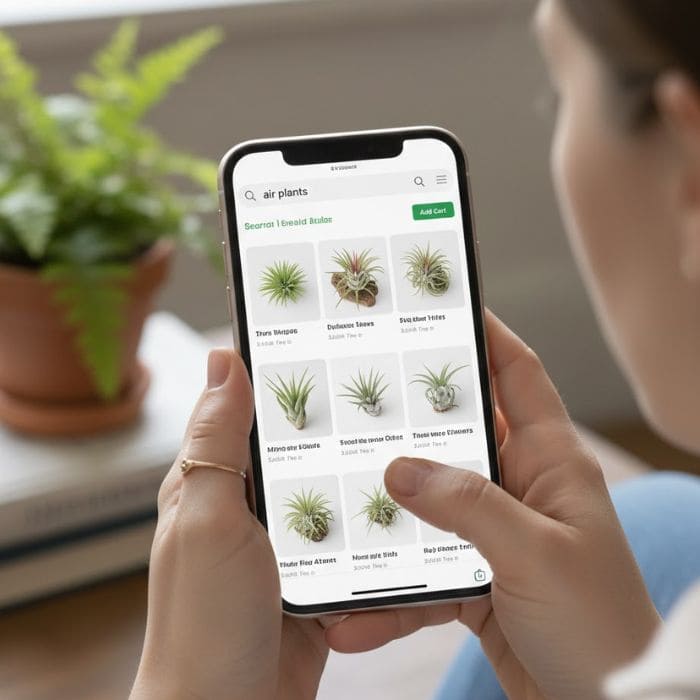
What made this idea even easier was timing. I did not need to plan far ahead or wait days for supplies, because there are now several local plant shops that deliver air plants surprisingly fast.
I ordered a small selection from a nearby indoor plant store that partners with same-day couriers, choosing a mix of small and medium air plants, and to my genuine surprise, they arrived in just about two hours, still fresh, gently packed, and ready to use.
That kind of convenience removed hesitation. Instead of postponing the idea, I could follow the energy of it while it was still alive.
Rather than another hanging piece or tabletop arrangement, I wanted something vertical and grounded, something that could stand quietly and bring height into the room without demanding space.
A seashell air plant tower felt like the right balance, sculptural but calm, decorative but alive.
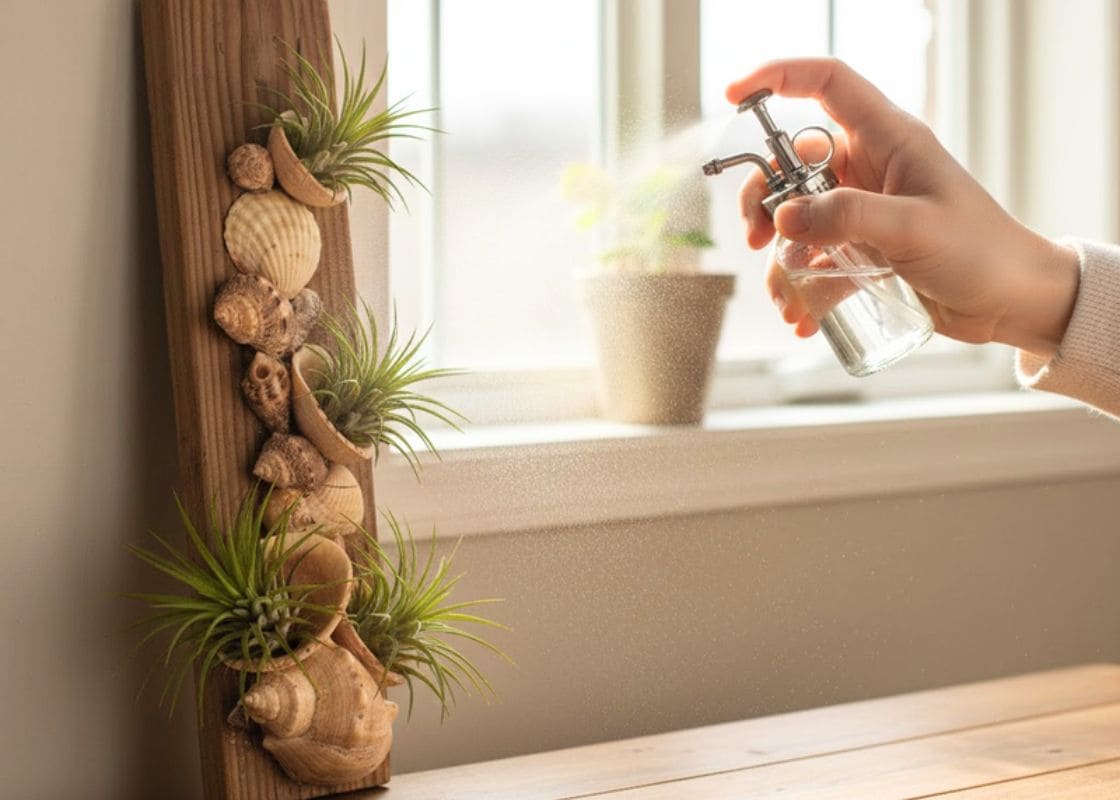
The shells would act as natural holders, cradling the air plants, while the structure itself would remain simple enough to let materials speak for themselves.
How I Built the Tower Slowly and Intentionally
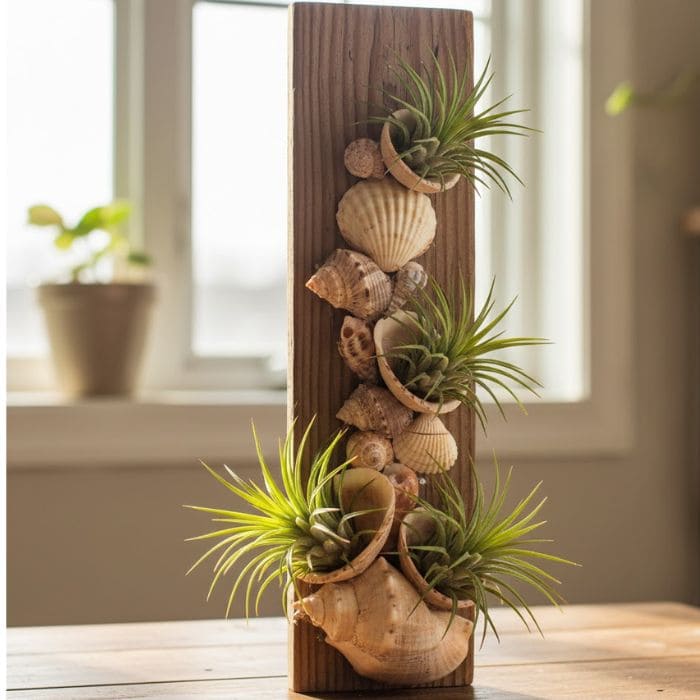
I began with a narrow piece of reclaimed wood, tall enough to feel intentional but slim enough to stay gentle in the room, and before attaching anything, I placed it near the window for most of the day, letting myself see how light moved around it.
Once that felt right, I arranged the shells loosely against the base without glue, rotating them, stacking them, and paying attention to which shapes naturally supported an air plant and which worked better as visual anchors.
When it came time to secure everything, I used a clear, strong adhesive and applied it sparingly, because air plants need airflow and should never be sealed tightly.
I worked from the bottom upward, attaching one shell at a time and allowing it to settle before moving on, placing air plants between shell groupings in a way that allowed them to be easily removed for misting and care.
Where It Lives Now and How It Changed the Room
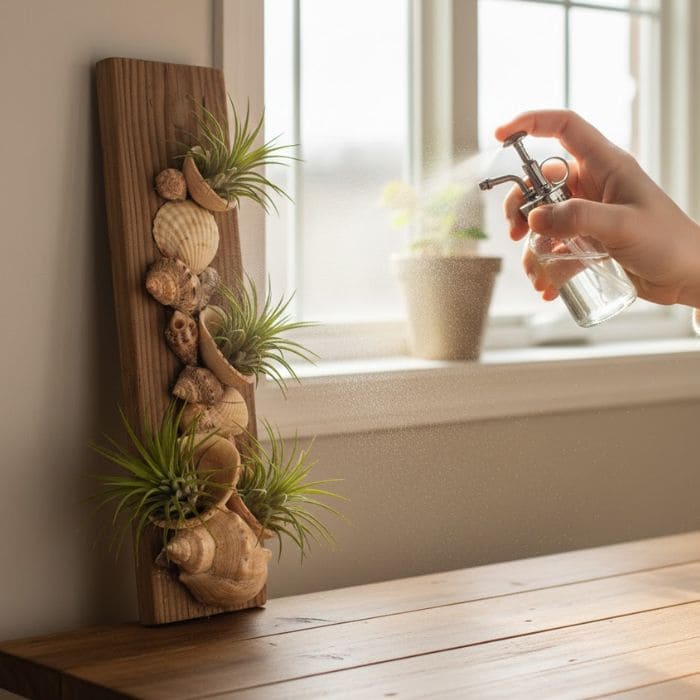
The finished tower now stands near a window where it receives indirect light throughout the day, and what I love most is how it changes without effort.
In the morning, the shells catch soft light and feel almost translucent. In the afternoon, the air plants cast quiet shadows that shift as the room warms.
It does not ask to be noticed, but when it is, it feels calm and grounded, which is exactly how I want objects in my home to exist.
This seashell air plant tower feels like a natural next step in how I live with the things I love, not collecting more, not repeating the same gestures, but allowing familiar materials to suggest new forms.
It also feels like a quiet way of honoring my neighbor’s gift, because instead of placing her shells among others, I let them become the beginning of something living and evolving.