Last Sunday, I drove back to Virginia Beach again, not because I needed anything specific, but because the beach has become the place where my thoughts naturally untangle themselves.
Sundays feel different there, a little slower, a little warmer, and more human than the rest of the week. The air was mild, not too hot, not too cool, and the ocean looked calm, as if it had decided to rest along with everyone else.
Unlike my quiet early walks at Colonial Beach, this visit felt alive. Families were setting up umbrellas, couples walked barefoot along the waterline, and joggers nodded politely as they passed.
Near the edge of the boardwalk, I noticed several small tables set up by local sellers, nothing polished or commercial, just folding tables, baskets, and handwritten signs.
Meeting the Local Sellers and Their Quiet Coastal Charm
One table in particular caught my attention. Behind it stood two women who looked like they had spent most of their lives near water.
One had sun-lightened hair pulled into a loose bun, strands escaping freely around her face, and her skin carried that warm tone you only get from years of outdoor living. The other wore her gray hair in a low braid, her hands strong and steady as she arranged items on the table.
They were dressed simply in linen shirts and worn sandals, speaking softly to each other, never rushing, never pushing anyone to buy. There was a calm confidence about them, the kind that comes from knowing exactly where you belong.
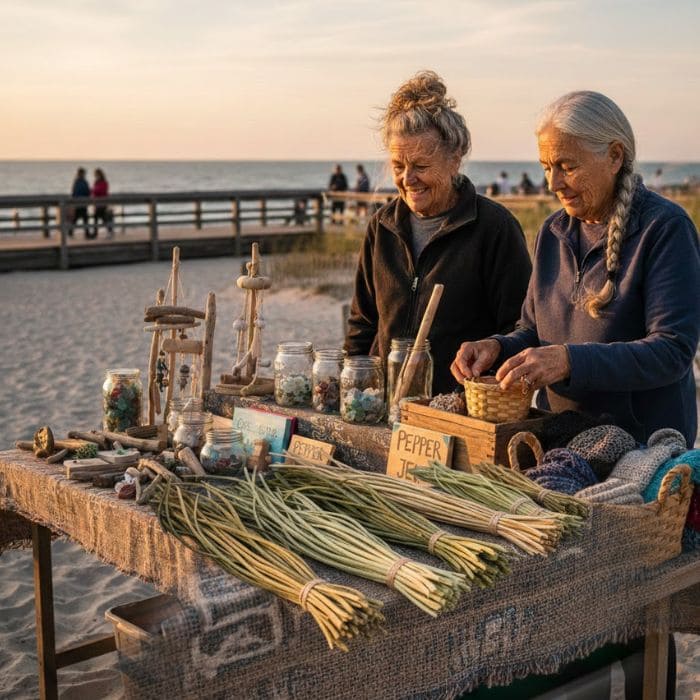
On their table were bundles of long, thin strands tied together with twine. At first glance, they looked like dried grass, but something about the color made me pause.
The strands shifted between pale green, washed olive, and sandy beige, with soft bends that suggested water, not wind, had shaped them.
I stepped closer and asked, “Excuse me, what is this grass used for?”
The woman with the braid smiled gently and picked up a bundle, letting it fall loosely through her fingers.
She said, “It’s sea grass. It washes up after tides and storms. People around here have always used it for simple decor.”
I asked if they collected it themselves, and the other woman nodded, brushing hair from her face.
“Early mornings,” she said. “You find the best pieces when the beach is quiet.”
Price, Texture, and the Decision to Bring It Home
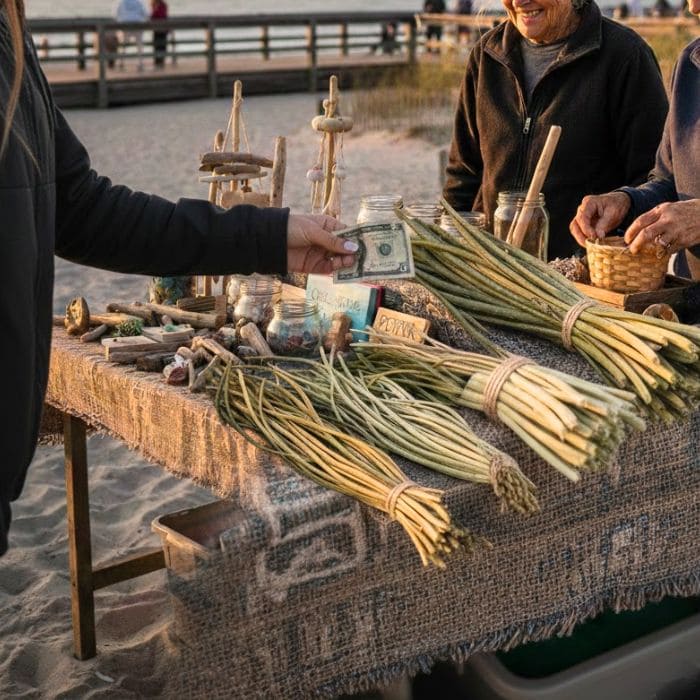
The prices were written on a small piece of cardboard. Five dollars for a small bundle and ten dollars for a larger one.
I picked up a smaller bundle, about the width of my palm, and felt how light it was. The strands were dry but not brittle, flexible enough to bend without snapping, and each one carried slight variations in thickness and tone.
I paid five dollars, thanked them, and walked away holding it carefully, already imagining it as something more than a beach find.
Searching for Answers and Finding Very Little
When I returned home later that day, I placed the sea grass on my table and searched online, hoping to find guidance.
For almost an hour, I read short posts and scanned images showing sea grass used in baskets, table runners, and coastal displays, but no one explained how to press it properly or turn it into framed art.
There were no clear instructions, no step-by-step guides, and no real stories from people who had tried. Instead of feeling discouraged, I felt strangely excited.
Choosing to Create My Own Method
I studied the sea grass closely, laying it out strand by strand. Some pieces were straight and calm, others curved softly, almost like they still remembered the movement of water.
I thought about how flowers are pressed and how patience matters more than pressure, especially when working with natural materials.
Materials I Used for Pressed Sea Grass Framed Art
- 1 small bundle of dried sea grass (about 20-25 strands, each 12-18 inches long)
- 6-8 sheets of parchment paper (standard baking size)
- 2 pieces of cardboard cut slightly larger than the grass length
- 4-6 heavy hardcover books
- Sharp scissors
- Tweezers for placement
- Acid-free backing paper (white or soft beige, 8×10 inches)
- 1 simple frame with glass (8×10 inches works well)
- Clear-drying craft glue (used sparingly)
How I Pressed the Sea Grass, Slowly and Carefully
The strands were longer than flowers and less cooperative, some straight and calm, others curved as if they still remembered the pull of the tide.
I trimmed them gently with scissors, not trying to make them uniform, but just short enough to fit inside the frame I had in mind. I wanted the final piece to feel natural, not controlled.
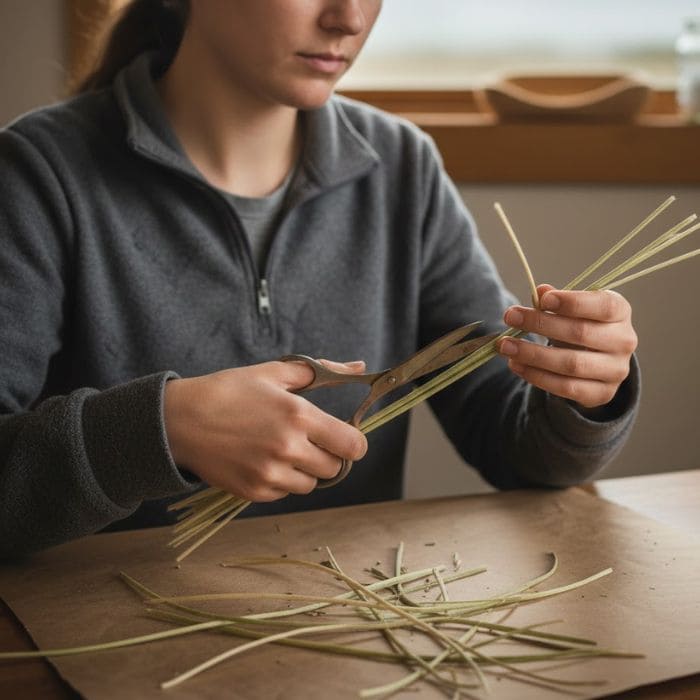
I laid a sheet of parchment paper on the table and began arranging the sea grass one strand at a time, leaving small gaps between them so they would not overlap too heavily during pressing.
I adjusted each piece slowly, stepping back more than once to make sure the flow felt balanced rather than stiff.
Once I was satisfied, I placed another sheet of parchment paper on top, followed by a piece of cardboard to help spread the pressure evenly.
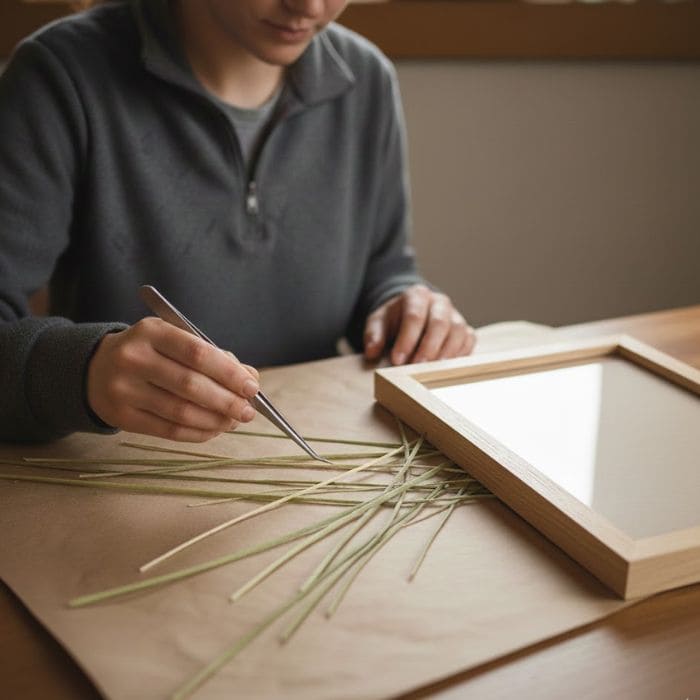
On top of that, I stacked several heavy hardcover books, making sure the weight felt steady and centered. I resisted the urge to add too much weight, knowing that sea grass is more delicate than it looks.
Then I left it alone. For five full days, I did not touch it, only reminding myself that pressing is less about force and more about patience.
What I Learned When I Opened the Press
When I finally lifted the books and peeled back the parchment, the results were not perfect, and that was the most reassuring part. Some strands had flattened beautifully, while others kept a gentle curve. A few edges looked uneven.
That moment taught me that pressing sea grass is not about making it completely flat like paper. It is about calming it just enough so it can rest inside a frame while still holding movement and life.
The slight bends and variations made the piece feel closer to the beach, not farther from it.
Arranging the Sea Grass Into Art
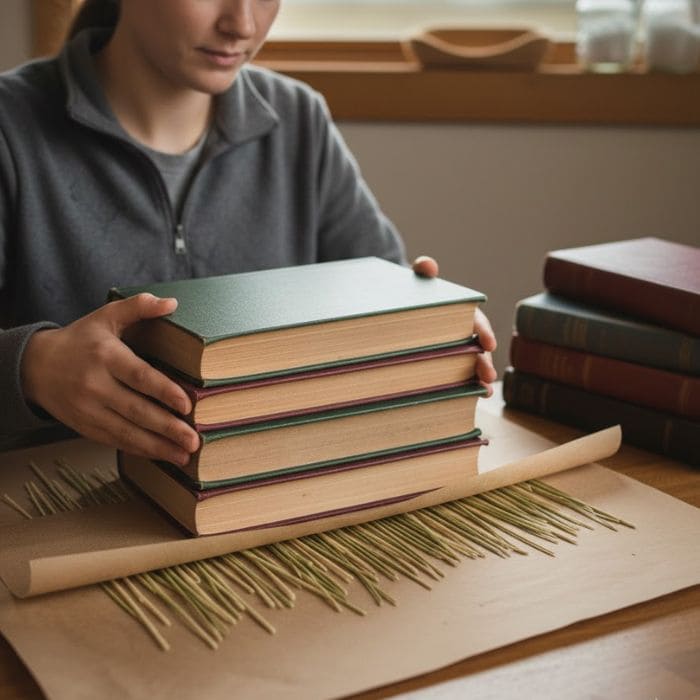
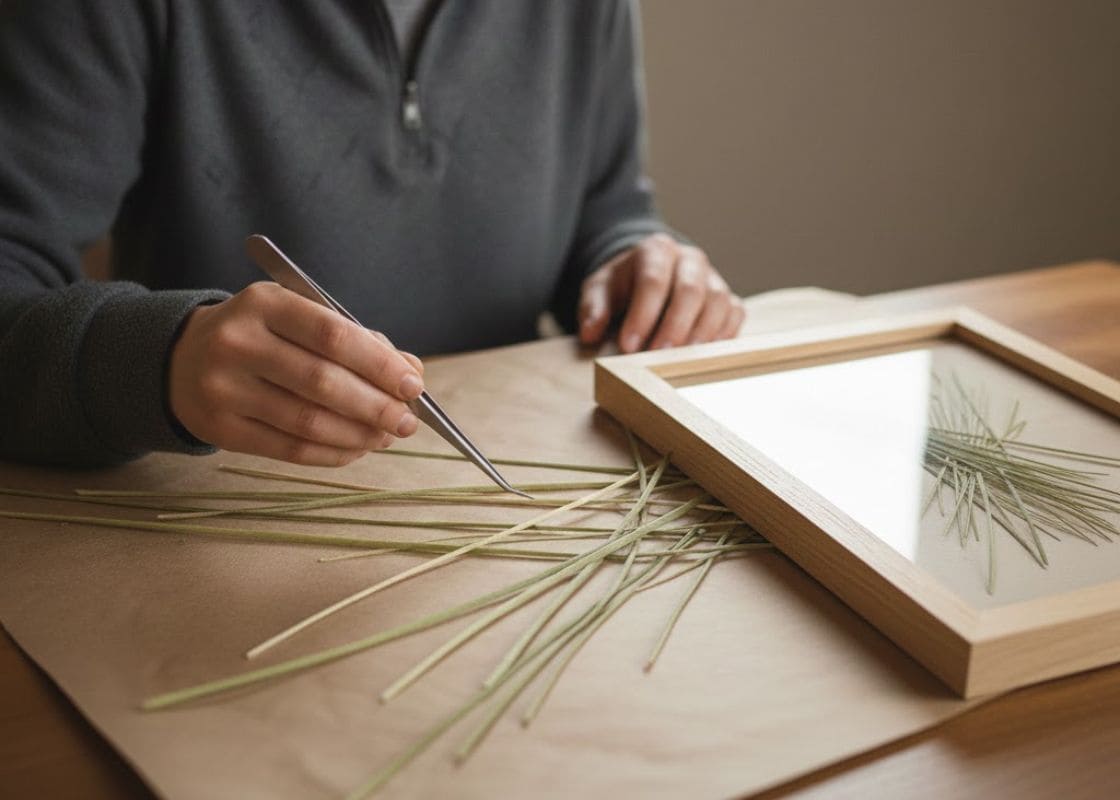
Once the grass was fully pressed, I placed a sheet of neutral backing paper on the table and began arranging the strands again, this time thinking about the final composition.
I used tweezers to move each piece gently, overlapping them slightly so they felt connected, almost like they were drifting in the same direction.
I avoided symmetry on purpose, letting some strands lean and others stretch, because the shoreline never arranges itself in straight lines.
When everything felt right, I secured the grass with tiny dots of clear-drying glue, only where it was truly needed.
After the glue dried, I carefully placed the glass over the design, sealed the frame, and wiped away fingerprints before stepping back to look at it as a whole.
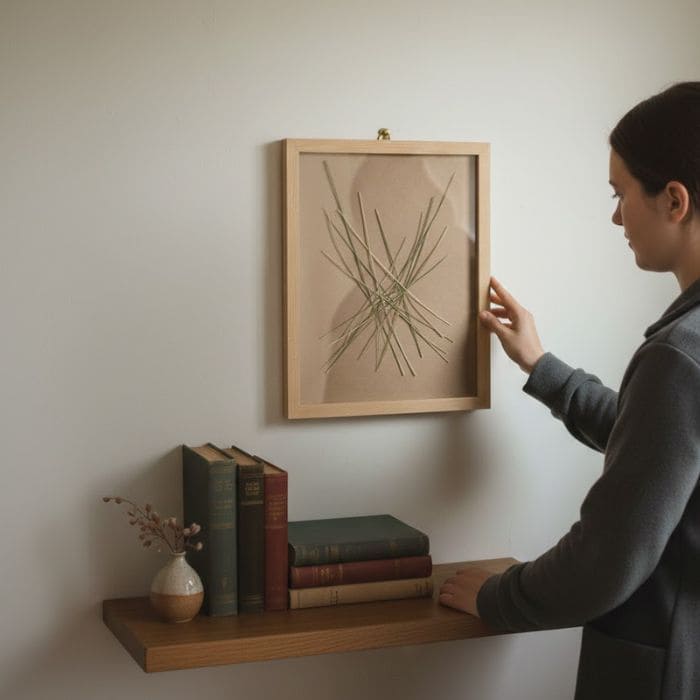
Hung against a white wall, the framed sea grass felt quiet and grounding. The pale greens, soft olive tones, and sandy hints blended naturally with the room instead of demanding attention.
What I loved most was how the piece changed throughout the day. In morning light, it looked fresh and airy. In the evening, under warm lamps, it softened into something calm and comforting, like the memory of a slow walk by the water.