When I first moved here, everything around me still felt unsettled, including myself.
I remember walking slowly around the neighborhood during those early days, partly to get familiar with the streets and partly because I did not yet feel rooted anywhere.
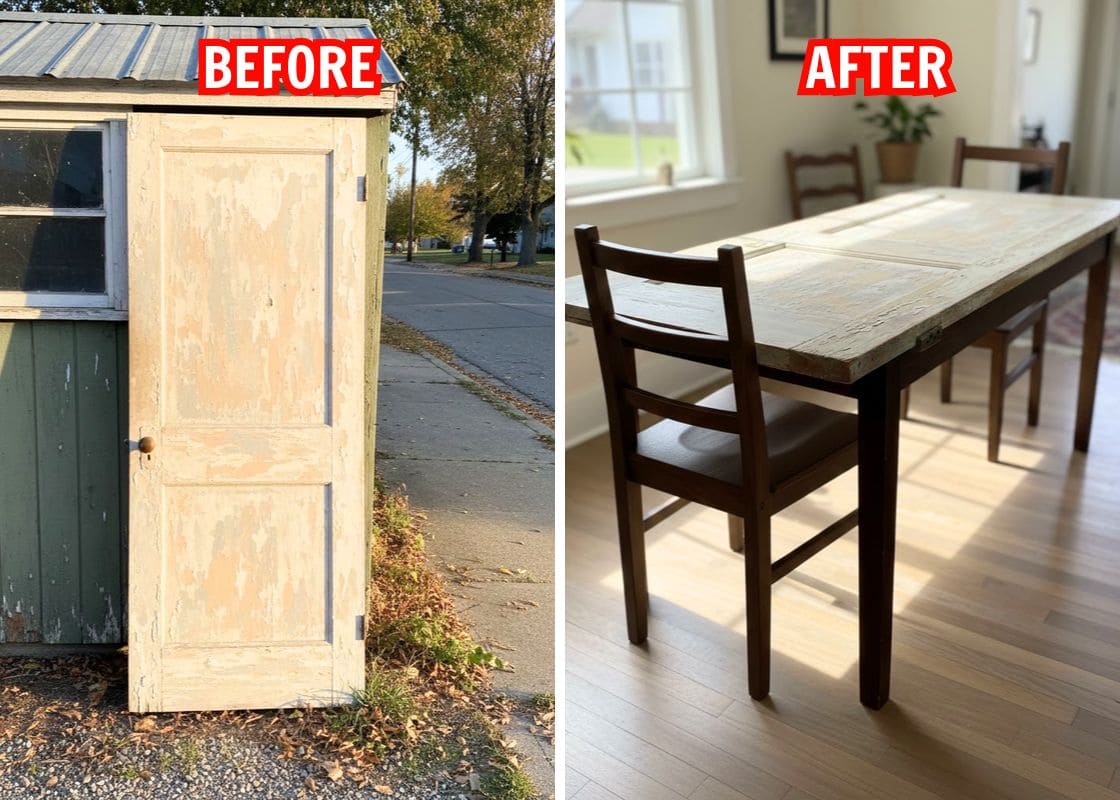
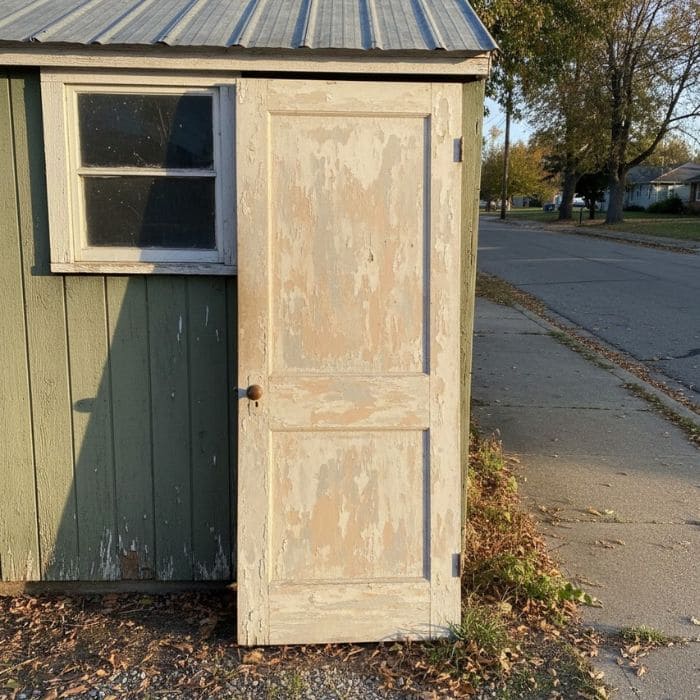
One afternoon, not far from my place, I noticed an old wooden door leaning against a small shed near the curb, positioned in a way that made it look abandoned but not unwanted, as if it had simply been set aside and forgotten.
The door was tall and solid, roughly 80 inches long and about 32 inches wide, the kind of standard interior door that used to belong to an older home.
The paint was worn down to a soft off-white, with faint layers of pale beige and gray peeking through where time had chipped it away.
It rested slightly crooked on the ground, one corner touching gravel, the other pressing against the shed wall, and it looked like it had been there long enough for people to stop noticing it.
I slowed my steps without realizing it, because something about the weight and presence of that door felt familiar, even comforting.
What My Hands Felt Before My Mind Decided Anything
When I placed my hand on the surface, the wood felt dry and firm, not weak or crumbly, and that was the moment I knew it was not done yet.
There were small dents across the panel, shallow scratches near the edges, and a few deeper marks where years of use had left their memory.
The door had clearly lived a full life already, opening and closing for someone else, marking time in a way most furniture never gets to.
I asked around and learned it had been removed during a renovation and left there because it was no longer needed.
With permission, I carried it home slowly, feeling its weight pull against my arms, and leaned it against the wall in my living space.
Letting the Idea Form Without Forcing It
For several weeks, the door became part of the background. I walked past it daily, sometimes stopping to imagine what it could become, other times barely noticing it at all.
I thought about turning it into a desk, then a bench, then even shelving, but none of those ideas felt right. The door was long, wide, and grounded, and it wanted to be something people gathered around.
One evening, sitting at a small temporary table that barely fit a plate and a cup, I realized what was missing from my home was not decoration, but a place to sit comfortably and eat, to pause, to feel settled.
That was when the idea finally landed without effort.
Preparing the Door While Respecting Its Past
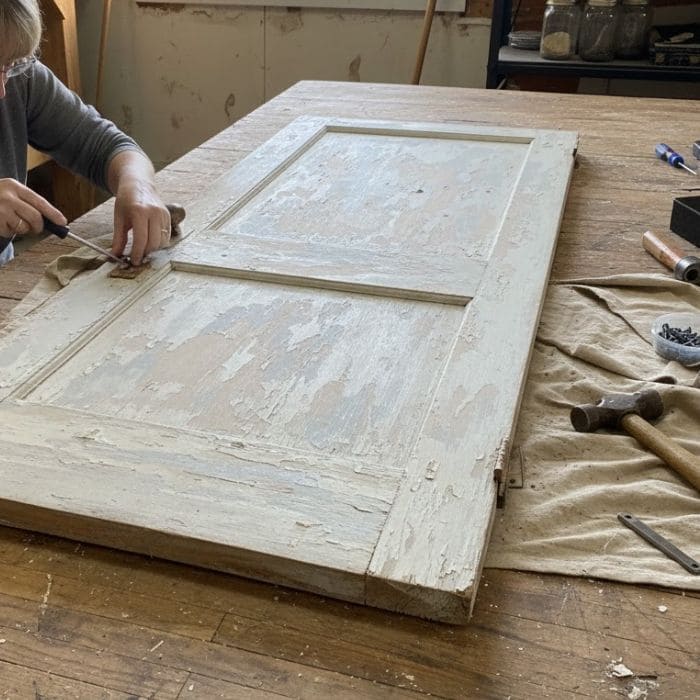
The first thing I did was clean it gently, because I did not want to erase what made it special.
I wiped the surface with a damp cloth, removing dust and residue while letting the worn paint remain exactly as it was. Some flakes loosened naturally, others stayed firmly in place, and I allowed that to happen without interference.
Once clean, I laid the door flat on the floor and examined it closely. The thickness measured just under 1¾ inches, which was strong enough to support weight without additional reinforcement.
I checked for loose joints, hidden cracks, or weak spots and was relieved to find the structure solid throughout.
I removed the old hinges and door hardware, filling the holes carefully with wood filler and smoothing them just enough so plates would sit flat later.
Deciding on Table Height and Leg Placement
Before attaching anything, I needed to decide how tall the table should be.
I measured the chairs I already owned, which sat comfortably at a height of 18 inches, and tested different table heights by stacking books beneath the door until it felt natural.
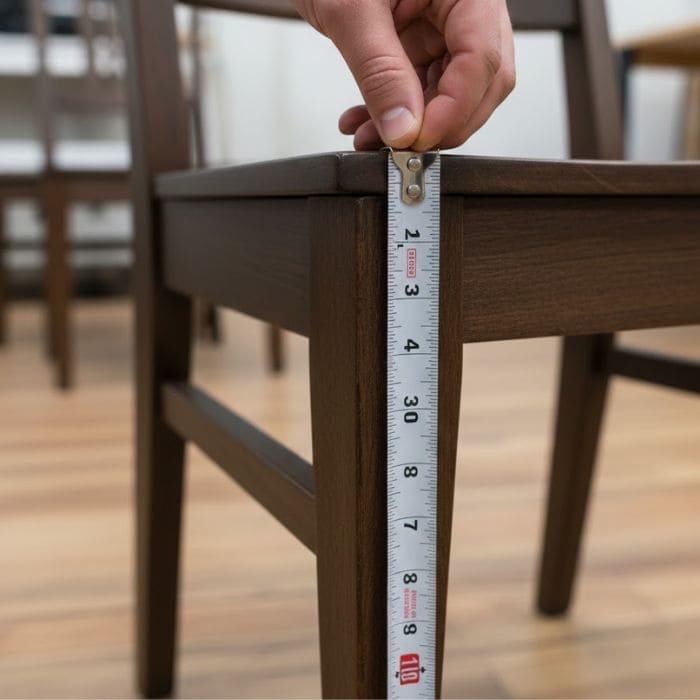
The most comfortable height ended up being 30 inches from floor to surface, which allowed enough legroom while keeping the table grounded.
For legs, I reused a set I had saved from an earlier project, simple straight legs measuring 28 inches, which paired perfectly once the door thickness was accounted for. I positioned them about 3 inches inward from each corner, giving the table stability without crowding the edges.
Because a door is not designed to be horizontal, I took my time here, drilling pilot holes slowly, checking alignment repeatedly, and reinforcing the underside with support brackets to prevent any long-term warping.
Sanding and Sealing Without Overworking
Sanding was light and intentional. I focused mainly on the edges and corners, softening them so hands and arms would rest comfortably.
I avoided sanding the center panels heavily, because the marks and unevenness were part of the door’s story.
For the finish, I chose a clear matte sealant, applying thin coats with a brush and allowing each layer to dry fully before adding the next.
The sealant deepened the wood tone slightly, bringing out the grain beneath the paint without making the surface shiny or artificial. Once sealed, the table felt smooth but not slick, protected but still honest.
The First Time I Used It as a Table
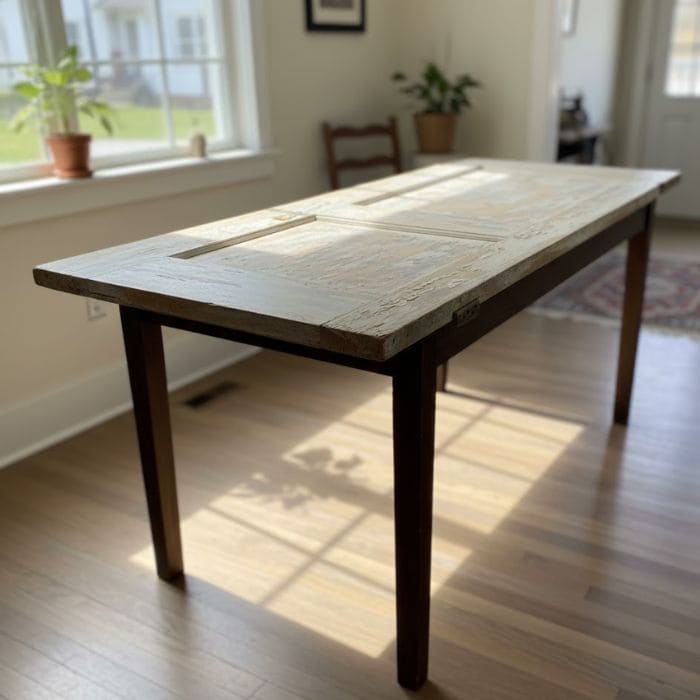
When I finally stood the table upright and moved it into place, it fit the room as if it had always belonged there.
The length allowed plenty of space for meals and work, while the width felt generous without overwhelming the room.
The first meal I ate there was simple, but it felt meaningful in a way I did not expect. Sitting at that table, I felt grounded, like something in my home had finally clicked into place.
The door that once stood forgotten by the curb had become the center of daily life, holding plates, conversations, quiet mornings, and long evenings.