Do you still remember my small trip to the beach in my last post, the one where I left the house at 4 a.m and somehow ended up walking the shoreline at 5 a.m like a person who definitely has their life together, even though I am usually the kind of girl who can sleep until noon if no one stops me.
I shared the driftwood I carried home and how it became a lamp, but there was one small detail I forgot to show you, and it has been sitting quietly in my dresser this whole time like a secret waiting for the right day.
That morning at Colonial Beach, I was not only looking at driftwood and shells. I also found what I like to call the pearl of the beach, a tiny piece of sea glass that looked ordinary at first, but later changed the entire mood of my living room in a way I did not expect.
The Book That Made Me See Sea Glass Differently
Back when I studied at Corcoran School of the Arts and Design, I had a habit of falling in love with small objects that carried a story, then building entire ideas around them.
One day, I found a book that felt like it was written for people like me, people who notice quiet beauty and want to keep it.
It was “Pure Sea Glass: Discovering Nature’s Vanishing Gems” by Richard LaMotte, and I remember reading it slowly because it made even the simplest beach find feel meaningful.
The book explains how broken glass, after years of being shaped by water and time, becomes those soft, frosted pieces that look like little treasures instead of leftovers.
That idea stayed with me, not as a sad story about trash, but as a gentle reminder that transformation is real, and that time can soften sharp edges into something beautiful.
The Day I Opened My Dresser and Found It Again
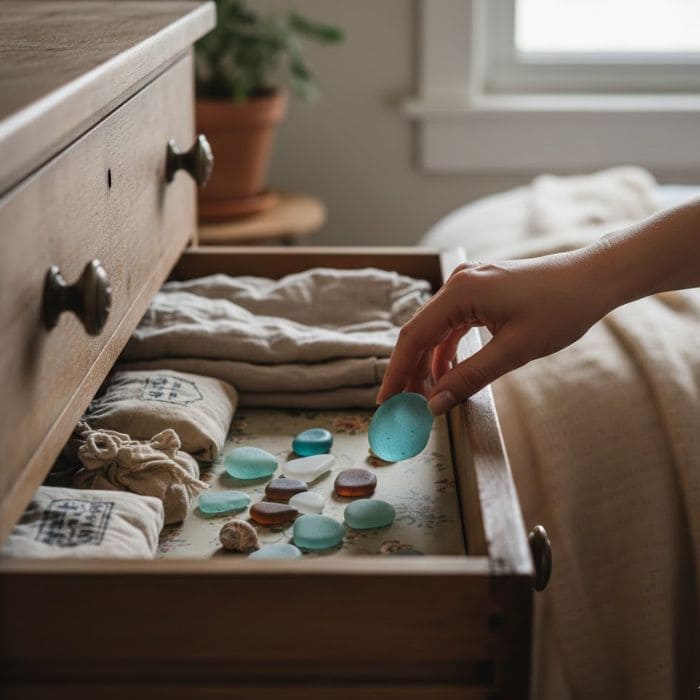
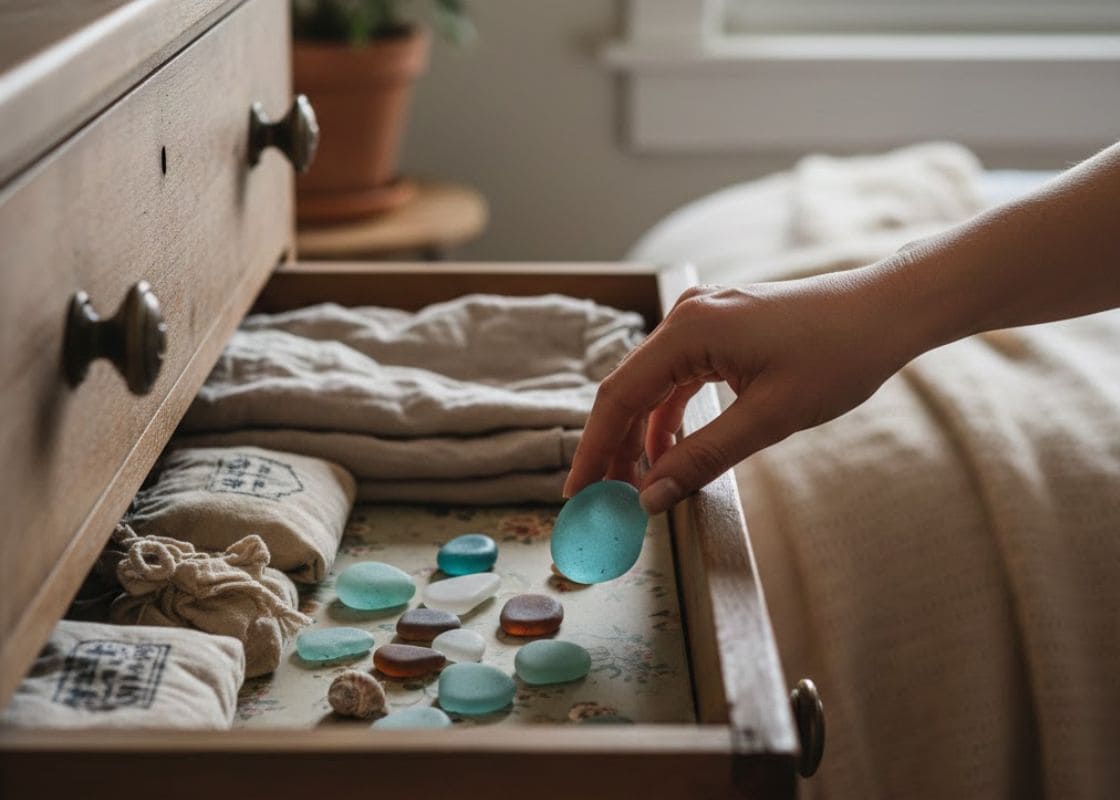
After that beach morning, I came home with sandy shoes and a calm mind, and I placed the sea glass in my dresser without much thought, almost like I was putting a bookmark into my own life.
Then days passed, work got busy, and I moved on to other projects. The driftwood lamp became my focus, and the little sea glass sat there quietly as if it did not mind being forgotten.
Then today, while looking for a scarf, I opened the drawer and saw it again, resting near the corner like a tiny piece of the ocean that had followed me home.
What It Looked Like Up Close
It was small, about the size of my thumbnail, not perfectly round, but softened into a shape that felt smooth and safe to hold.
The edges were gently curved, almost like they had been polished by patient hands, even though I knew it was the sea that did the work.
Plus, the surface had that frosted look sea glass is known for, like the glass had learned to glow without trying too hard.
The color was what made me pause. In indoor light, it looked like a soft blue-green, almost quiet, almost shy. It reminded me of shallow water near the shore, the part that looks pale at the edges and deeper as you step farther in.
Holding It Up to Sunlight and Seeing the Real Color
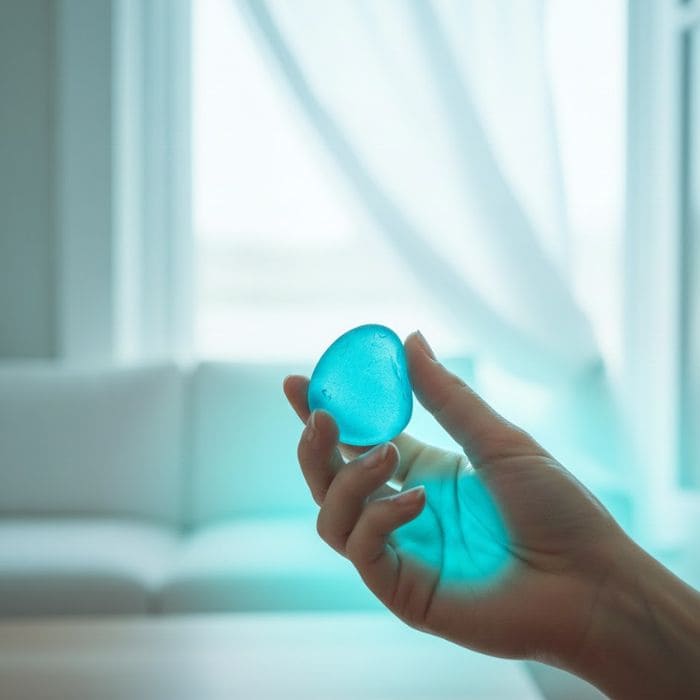
I walked to the window and raised it under the morning sunlight, and that is when the color truly showed itself.
The light passed through it like it was waking up, and suddenly it looked brighter, more alive, like a clean seafoam tone mixed with a hint of icy blue. It had that fresh feeling, like early morning air when the world is still calm and your mind has not collected stress yet.
I turned it slowly between my fingers, watching the shade shift as the sunlight hit different parts, and I realized something simple but powerful.
This little piece carried a palette all on its own, and it was the exact kind of palette I wanted to live inside.
My Living Room Before This Moment
At the time, my living room was almost entirely white, and I mean white in the way that looks clean, but also sometimes looks like you are not done decorating yet.
The walls were white, the curtains were white and my sofa was a white slipcover that I wash more often than I want to admit.
Even my coffee table decor leaned toward pale tones because I thought that was the safest way to keep things calm and airy.
It looked nice, but it did not feel complete. It was peaceful, yes, but it lacked personality, like a room that was waiting for someone to move in, even though I had already been living there.
And standing there with that sea glass in the sunlight, I finally understood what was missing.
The Palette the Sea Glass Handed Me
That little piece of sea glass gave me seafoam blue-green as my main accent. It gave me driftwood gray in the frosted texture.
It also gave me soft sand beige from the way the light warmed around it. It even hinted at cool shadowy blue, the kind you see on the ocean right before sunrise.
Instead of choosing random shades from a paint aisle and hoping they worked, I had something real in my hand, something that already felt balanced.
How I Started Translating It Into the Room
I did not rush into big changes, because I have learned that fast decorating decisions usually lead to regret, especially when you are trying to stay budget-friendly.
I started by placing the sea glass on my coffee table and simply living with it there for a day, letting my eyes adjust and letting my mind play with ideas.
Then I began building around it in small, practical steps.
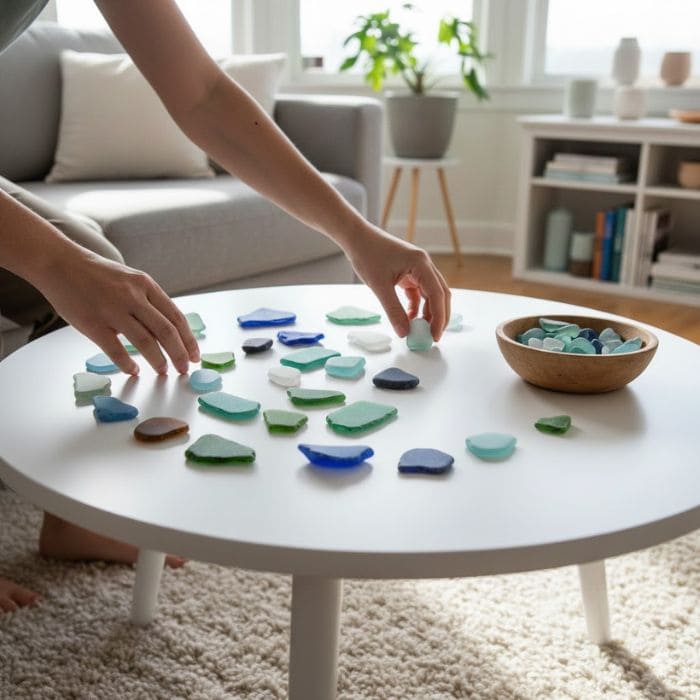
I brought in a throw pillow in a muted seafoam tone, but the first one I bought was too bright and looked almost minty, which made the room feel playful in the wrong way.
It reminded me of candy instead of the ocean, so I returned it and chose a softer shade that looked more like cloudy water near the shore.

I added a textured blanket in a sandy beige, the kind that looks warm against white without turning the room yellow. That one small change made the living room feel less cold right away, especially in the afternoon when winter light tends to look sharp.
I also swapped one of my shiny decor pieces for something matte and natural, because the frosted surface of sea glass has a quiet, powdery softness, and I wanted the room to echo that feeling.
A Few Small Troubles That Made the Result Better
One thing I did not expect was how different the colors looked depending on the time of day.
In the morning, the seafoam tones felt bright and fresh, but at night, under warm lamps, they could look darker and slightly more green than I wanted. That is when I realized I needed to keep the main room neutral and let seafoam be the accent, not the base.
I also tried a small piece of art with too much deep blue, thinking it would feel coastal, but it made the room look colder instead of calmer.
It pulled attention away from the softness I was trying to build, so I replaced it with something lighter, something with white space, gentle lines, and a hint of ocean color instead of a loud splash.
The Living Room Style I Ended Up Creating
The final style still feels clean and white, but now it feels alive. The room has white walls and airy curtains, but the textures are warmer, with natural fabrics that feel soft instead of stiff.
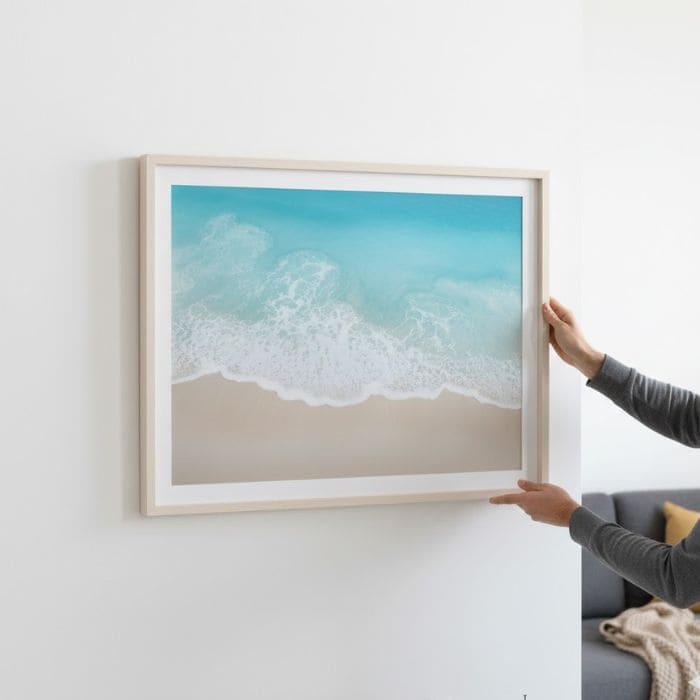
The seafoam accents show up in small places that surprise you, like a pillow, a ceramic vase, or a framed print that looks like it was painted with water.
Driftwood gray appears in woven baskets and candle holders, and the sand tones live in the rug, the blanket, and even in a few light wood pieces that make the space feel grounded.
It still feels like my calm, simple living room, but now it also feels like the coast is quietly present, not as a theme, but as a feeling.
I think that is what I love most about sea glass, even more than the color. It reminds me that inspiration does not always arrive as a big idea. Sometimes it arrives as a small piece of something, sitting in your drawer, waiting for you to notice it again.