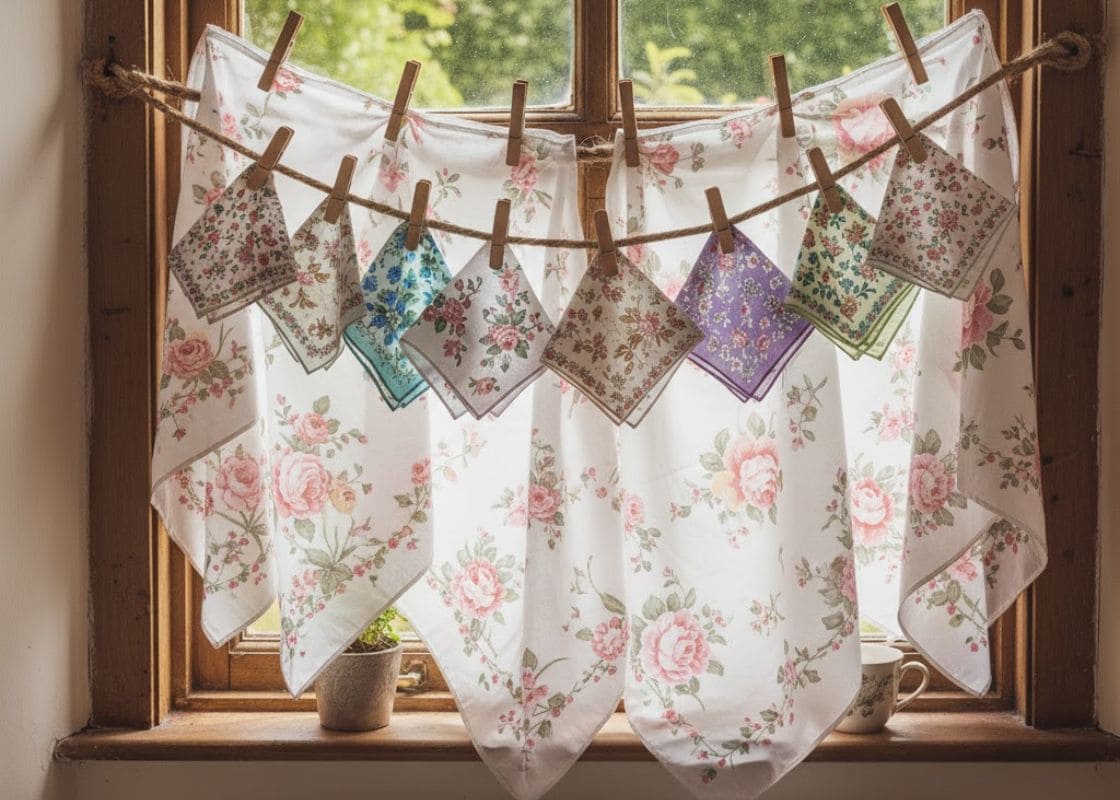
Every fall, the roads around my neighborhood slowly disappear under layers of leaves, pressed flat by passing cars, swept into corners by the wind, or piled along sidewalks waiting to be cleared away.
Most people see them as a problem, slippery, messy, something that needs to be removed as quickly as possible, but I have never been able to look at fall leaves that way.
To me, they feel like one of the most generous things the season offers, already dry, already beginning their return to the soil, and completely free if you are willing to slow down and notice them.
Why I Always Collect Leaves in Fall
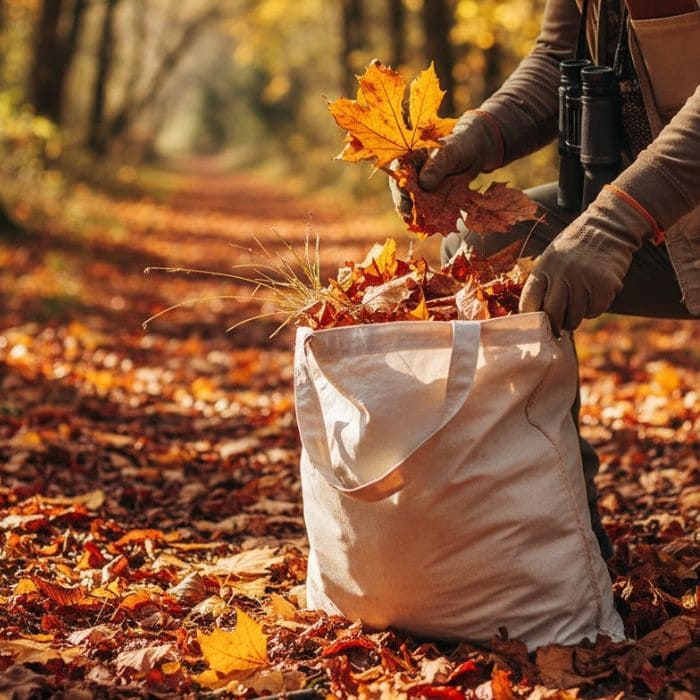
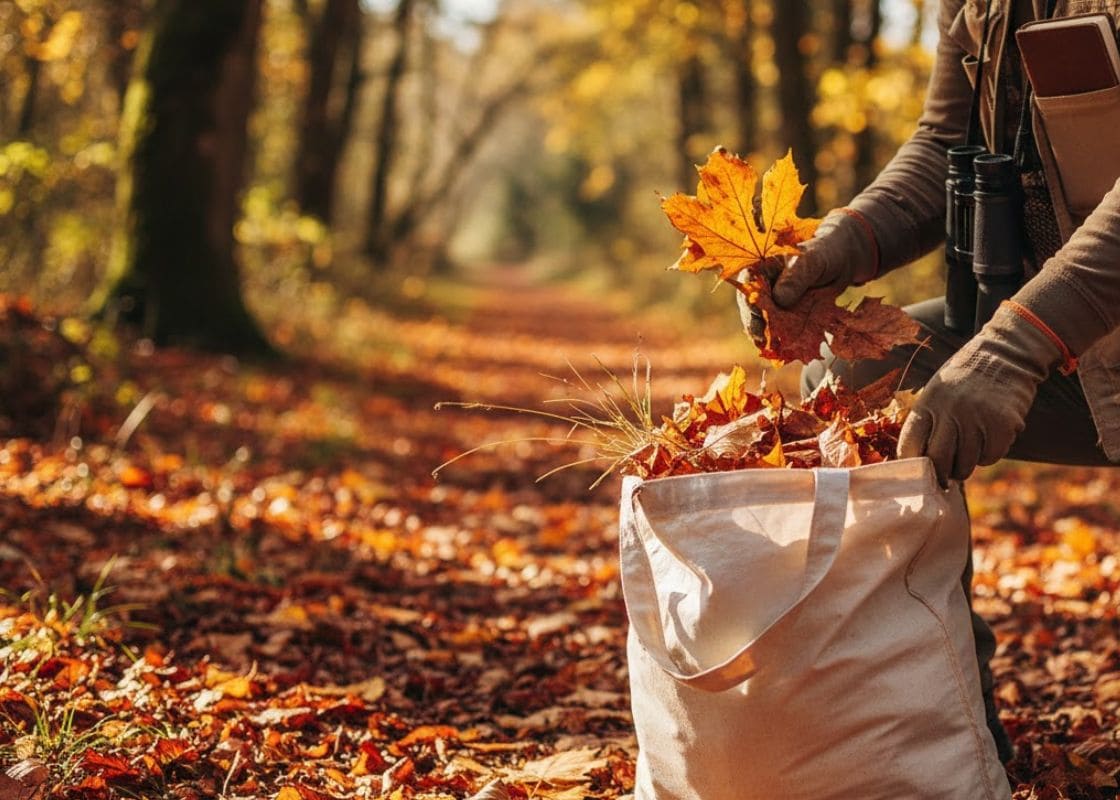
I collect leaves most intentionally in the fall because they are at their most useful then, crisp, lightweight, and rich in carbon, which makes them perfect for balancing softer kitchen scraps.
I am careful about where I collect them, choosing quieter areas away from busy roads, and I always look for leaves that feel dry and papery rather than damp, because starting with dry material makes everything easier later.
I never take huge amounts at once, usually just a bag or two gathered during walks, but over time those small collections become the foundation of something far more valuable than they look at first glance.
Why I Mix Leaves With Kitchen Scraps
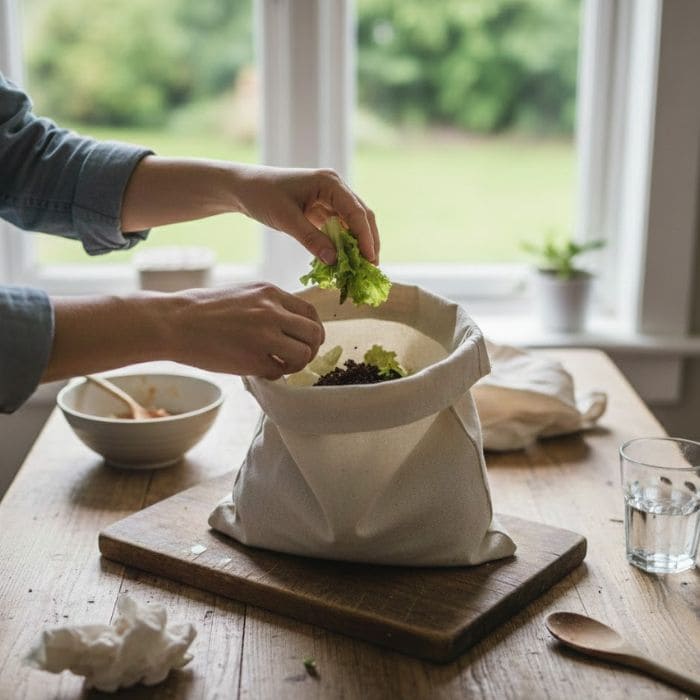
In my kitchen, scraps appear every day, vegetable peels, onion skins, coffee grounds, eggshells, and wilted greens, and while they are unavoidable, they can develop a strong, unpleasant smell if they sit on their own.
That odor is exactly why I never try to manage this process indoors for long, because some natural processes are better handled outside where air can move freely.
Fall leaves solve that problem naturally. Their dry texture absorbs moisture, softens odors, and creates balance, turning sharp-smelling scraps into something earthy and manageable instead of overwhelming.
How I Combine Them Without Overthinking It
I don’t follow strict measurements, because this method works best when it stays simple, but I do follow a rhythm learned through trial and error.
Every time I add a layer of kitchen scraps, I cover them generously with crumbled or shredded leaves, making sure nothing wet is left exposed.
The leaves act like a natural blanket, helping control smell while encouraging slow breakdown.
If the leaves are large, I tear them by hand before adding them, because smaller pieces settle more evenly and break down faster.
I build the mixture gradually over time rather than all at once, which keeps everything balanced and far easier to manage.
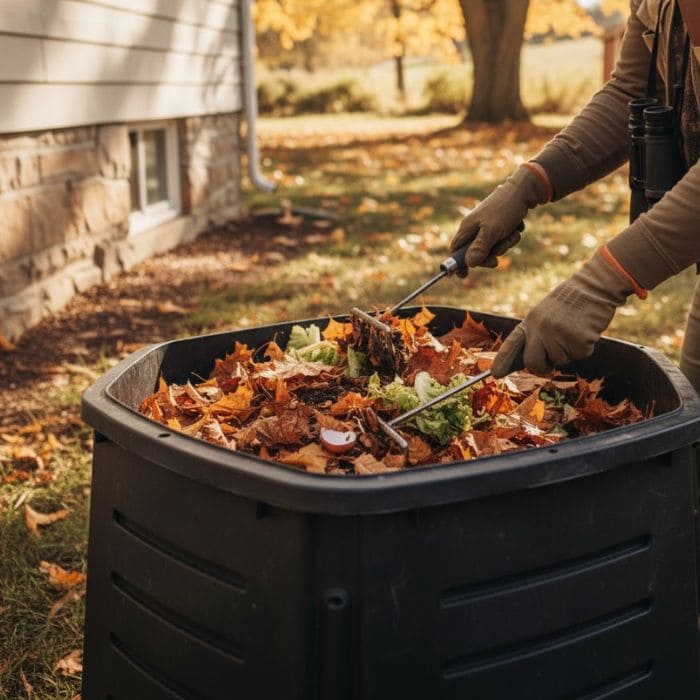
Because decomposition has a scent no matter how well balanced it is, I always keep this mixture outside, usually in a simple covered container or a quiet corner of the yard where it can breathe.
Keeping it outdoors removes stress completely, no lingering smells, no worries about spills, and no need to monitor it constantly.
Being outside also allows the mixture to respond naturally to weather, air, and temperature changes, which helps the leaves and scraps settle into a steady rhythm without much intervention.
What the Mixture Becomes Over Time
Over several weeks, the sharp edges of the leaves soften, the scraps slowly disappear, and everything darkens into a crumbly, soil-like texture.
The smell changes too, shifting from sharp and sour to something deeper and earthier, closer to damp forest ground than kitchen waste.
I never rush this stage, because time is doing the most important work, and patience here makes the final result far more pleasant to use.
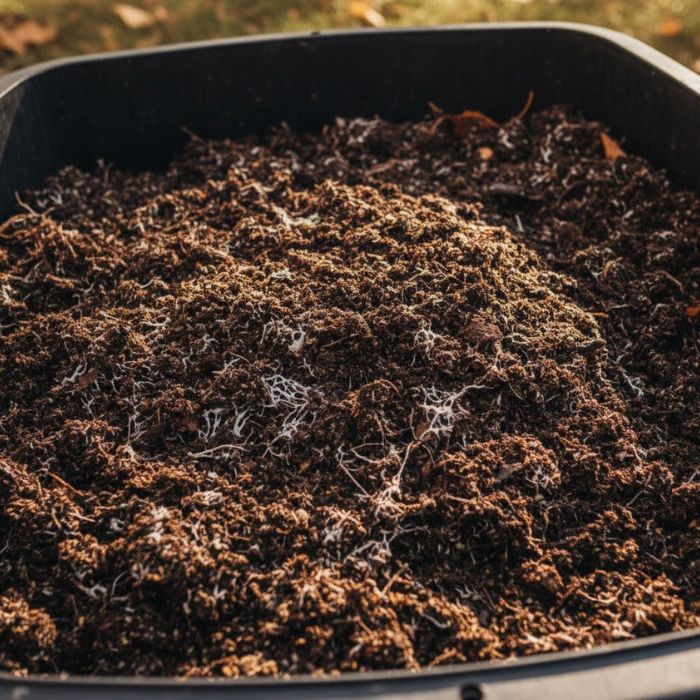
Once the mixture has broken down enough to feel loose and dark, I begin using it as mulch, not by piling it thickly, but by spreading it in thin, thoughtful layers.
I use it most often around outdoor plants, garden beds, and the base of shrubs, where it helps hold moisture in the soil and protects roots from sudden temperature changes.
I usually apply a layer about one to two inches thick, making sure to keep it slightly away from plant stems so air can circulate and prevent rot.
For young plants, I use even less, because they need protection without being smothered.
In garden beds, this mulch works especially well during dry periods, because it slows evaporation and keeps the soil underneath cooler and more stable.
I also use this mulch around larger potted plants that stay outdoors, spreading a thin layer across the surface of the soil to reduce drying and improve overall soil texture over time.
I avoid using it directly on indoor plants, simply because the process is meant for outdoor air and space, and I prefer to keep indoor soil clean and neutral.
What I’ve Learned From Using It Regularly
One of the biggest lessons this process has taught me is that mulch works best when it is supportive rather than overwhelming. A thin layer, reapplied when needed, does far more good than a heavy one applied all at once.
I have also learned that imperfect mulch is still useful mulch, because it continues to break down and improve soil long after it is spread.
Over time, the soil underneath becomes softer, darker, and easier to work with, and plants seem less stressed during temperature shifts, which tells me the process is doing exactly what it should.