I still remember the afternoon when the number finally stopped being abstract and became real, because until that moment, my closet had always just felt full in a familiar, slightly annoying way.
Two years ago, during one of those rare days when I decided to reorganize properly instead of just shuffling things around, I started pulling my jeans out one by one, stacking them first on the bed, then on the floor, then on a chair when I ran out of space.
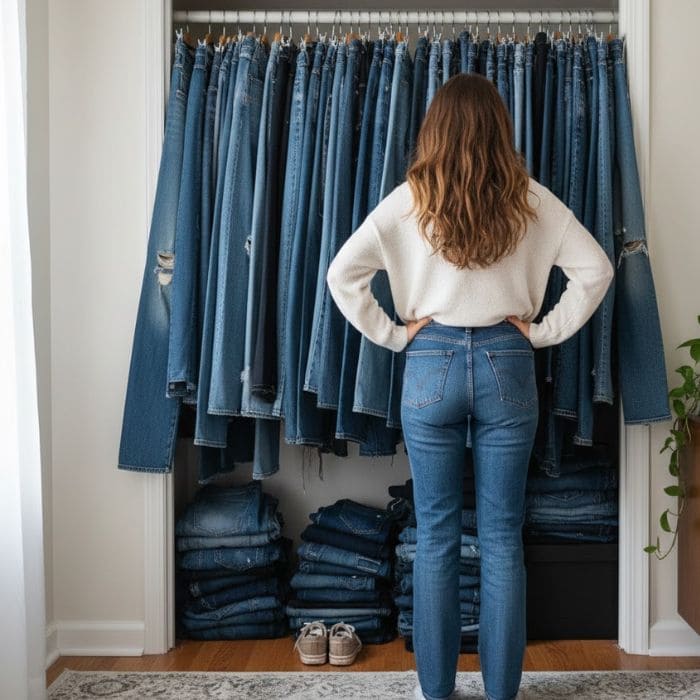
When I reached one hundred, I paused, sat down on the floor, and laughed, not because it was funny, but because it was unbelievable in the most honest way.
My bedroom is not big, and yet I had somehow collected nearly a hundred pairs of jeans through years of online shopping on Amazon, spontaneous flea market finds, and small shops near my house, each purchase feeling reasonable on its own until it quietly became excess.
Last year, that number dropped to around sixty, which felt like progress, but still far more than one person realistically needs, and that was when I knew I had to change how I treated denim, not by banning myself from it, but by learning how to respect it better.
Why Jeans Are So Hard to Let Go Of
I believe almost every woman or girl owns at least a few pairs of jeans, because jeans are one of the few pieces of clothing that follow us through different stages of life without asking too many questions.
They adapt to changing trends, shifting bodies, and evolving styles, and they are present in both ordinary days and meaningful moments, which makes them emotional in a quiet way.
Jeans hold memories. They remember the years when you felt confident, the times when your body changed, the trips you took, the phases you outgrew, and that emotional attachment makes it difficult to throw them away, even when you no longer wear them.
On top of that, denim is one of the most resource-intensive fabrics to produce, something I became more aware of as I started reading about sustainability, and once you know how much water and energy goes into making a single pair of jeans, waste starts to feel heavier.
1. Donating Jeans to Charity, and Doing It With Intention
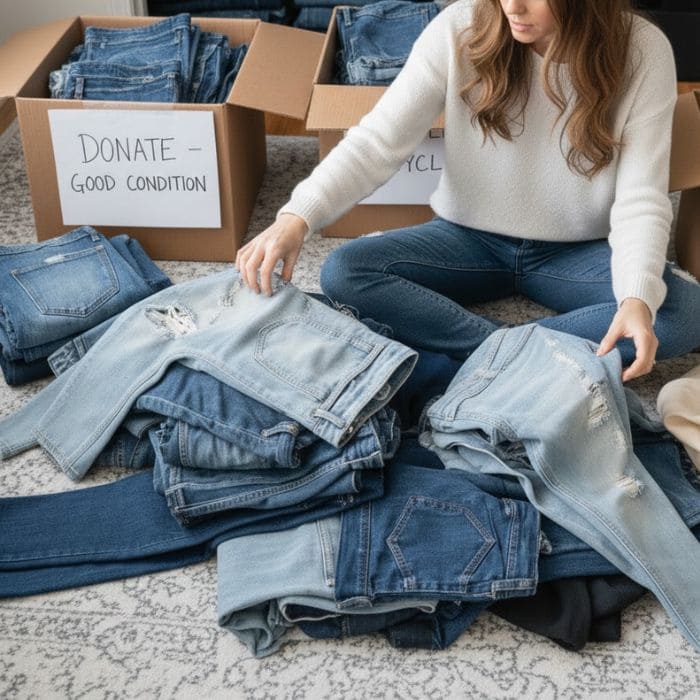
The first step for me was donation, but I learned quickly that giving responsibly matters just as much as giving generously.
I usually donate wearable jeans to Goodwill, mainly because there are several locations within a short drive from my home and their system is straightforward and accessible.
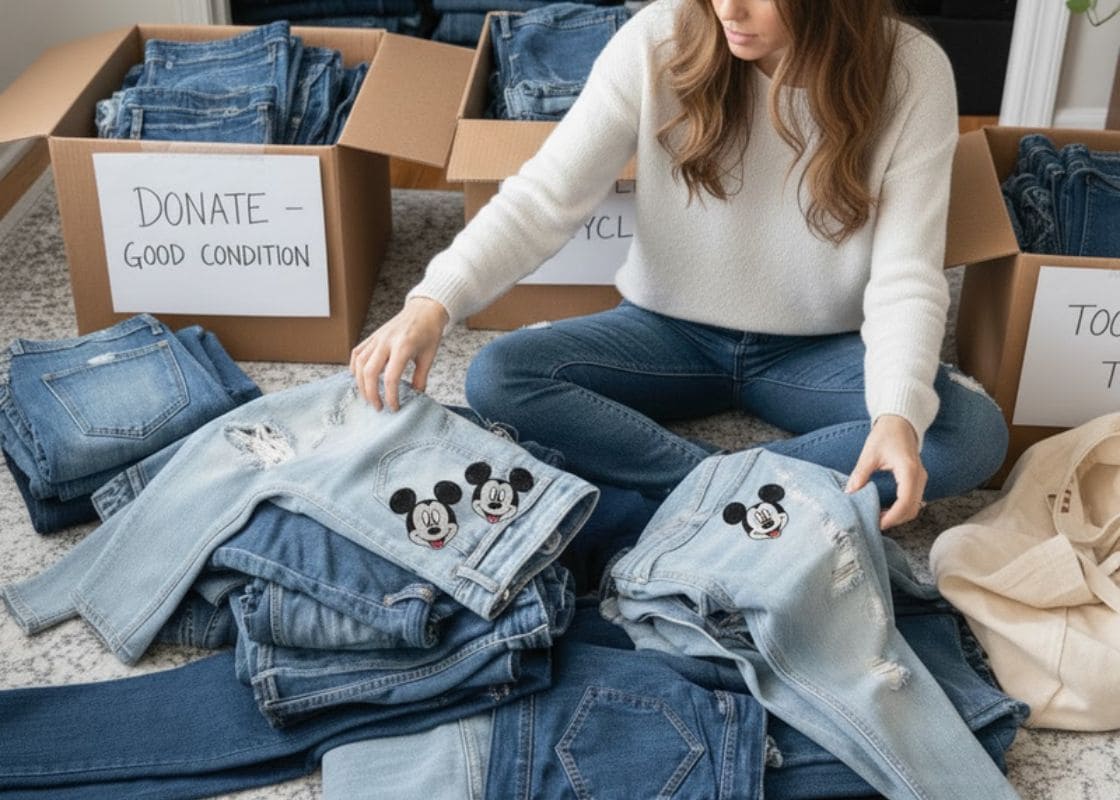
Before donating, I sort carefully, checking seams, zippers, buttons, and stains, because not everything belongs in a donation bin, even if the intention is good.
Jeans that are still in solid condition get washed, folded neatly, and placed in reusable bags instead of trash bags, which feels more respectful to the next person who might wear them.
For anyone considering donating, my advice is to be honest with yourself about condition, because donating damaged clothing can create extra work for charities rather than help them.
It also helps to donate seasonally, bringing jeans in cooler months when demand is higher, and to ask for a receipt, not only for records, but as a small moment of closure, a way of acknowledging that these pieces are officially beginning a new chapter elsewhere.
2. Painting Jeans to Create Something Truly Personal
This is the part that surprises people most when I talk about recycling denim, because painting jeans sounds intimidating if you have never tried it before, but for me it became one of the most joyful ways to extend their life.
Because I enjoy painting, I started with small areas that naturally frame design, like back pockets, front thighs, hems, or side panels, allowing the original structure of the jeans to guide the artwork rather than fighting against it.
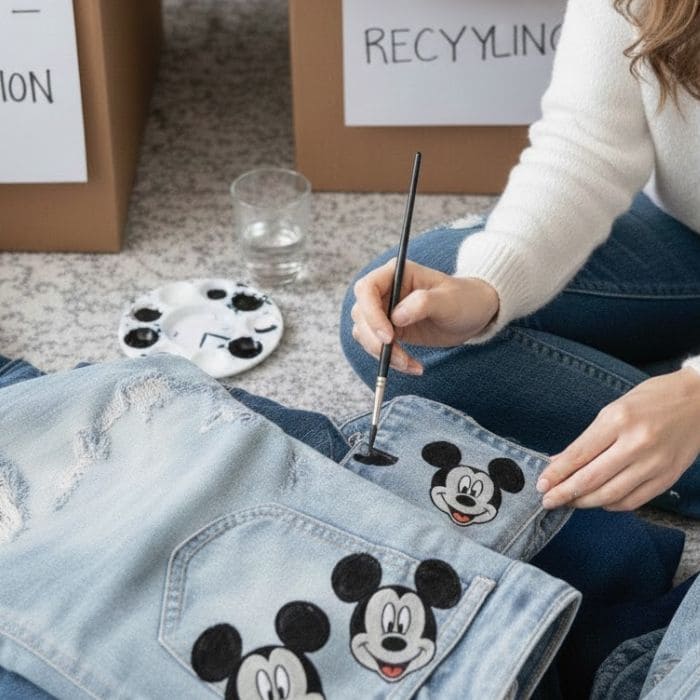
There is one cartoon film I especially love, and that is Mickey Mouse, not in a trendy or ironic way, but in a deeply nostalgic one.
Mickey feels timeless to me, cheerful without being loud, familiar without being boring, and painting him on denim feels playful rather than childish.
I often paint small Mickey faces peeking out from pockets, simple outlines on the knee, or subtle silhouettes along the hem, keeping the design light so it complements the jeans instead of overpowering them.
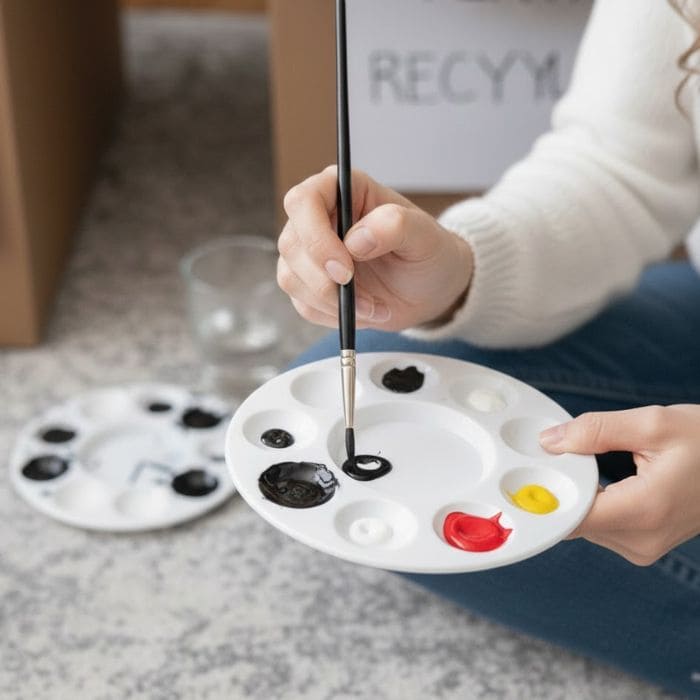
When painting, I use fabric paint or acrylic paint mixed with fabric medium, always testing first on an inside seam, and I keep designs simple, because denim already has texture and movement.
After painting, I let the jeans dry flat for at least 24 hours, then heat-set the paint with an iron on low heat, using a cloth barrier to protect the design, which helps it last through washing and wear.
These jeans often become my favorites, because wearing something you’ve altered yourself creates a quiet confidence that store-bought pieces rarely offer.
3. Turning Unwearable Jeans Into Sellable, Useful Pieces
Some jeans reach a point where donating no longer makes sense, knees are worn thin, hems are frayed beyond repair, or the fabric has softened so much that wearing them again would never feel right.
For a long time, these were the pairs that sat in a separate pile, waiting for a decision I kept postponing until I finally realized that this category held the most potential of all.
This is where upcycling stopped being just a personal experiment and slowly became something I could share with others, even sell
Denim Patchwork Blankets That Feel Heavy in the Best Way
The first project I ever felt confident selling was the denim patchwork blanket, partly because denim carries weight both physically and emotionally, and partly because people immediately understand its value once they touch it.
These blankets are not meant to be delicate or decorative-only pieces. They are meant to be used, draped over couches, folded at the end of beds, or pulled around shoulders on cold evenings.
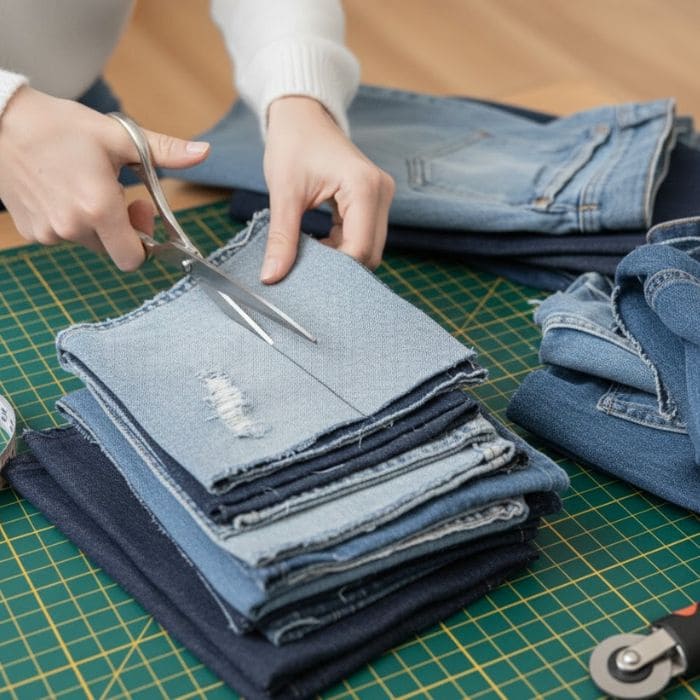
I usually cut old jeans into squares between 8 and 10 inches, depending on the thickness and condition of the fabric, and I take time sorting them by tone before sewing anything together.
Dark indigo, washed blue, gray, and black denim each create a different mood, and mixing them thoughtfully makes the blanket feel intentional rather than random.
I avoid overly worn areas but keep subtle fading and whiskering, because those marks tell the story of the jeans’ previous life.
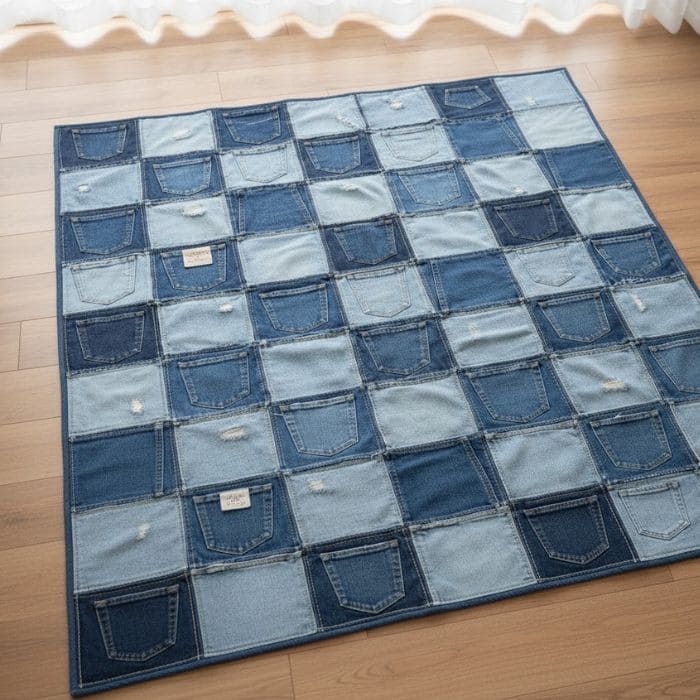
Once the patchwork top is finished, I always back it with a soft fabric, usually cotton or flannel, because raw denim alone can feel stiff against the skin.
That contrast between sturdy denim and soft backing is what makes the blanket comfortable and inviting rather than rough.
These blankets take hours of cutting, arranging, sewing, and reinforcing seams, but they are consistently the pieces people are willing to pay for, because they are durable, sustainable, and unlike anything mass-produced.
Everyday Denim Tote Bags That Actually Get Used
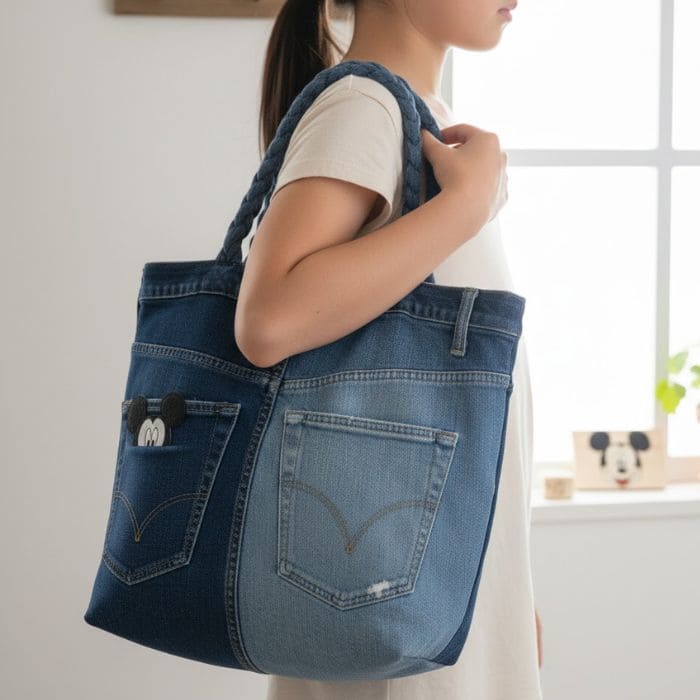
Another project that has surprised me in the best way is denim tote bags, especially because they are smaller, faster to make, and easier for people to imagine using daily.
Old jeans already contain some of the best design elements you could ask for, strong seams, deep pockets, belt loops, and thick hems, so instead of hiding those features, I build around them.
I usually cut panels from the legs, keeping pocket sections intact whenever possible, because those pockets become natural organizers for keys, phones, or small items.
The bottom of the bag is reinforced with thicker denim layers so it can carry groceries or books without sagging, and I always line the inside with lightweight cotton so the bag feels clean and comfortable to use.
What This Part of the Process Gave Me
Turning old jeans into sellable items changed how I see waste completely. Instead of feeling overwhelmed by quantity, I learned to see potential in layers, seams, and textures that had already proven their durability.
These projects also helped me slow down my consumption, because once you put this much effort into reuse, buying something new without thinking becomes much harder.