There is one thing I make every Christmas without needing to remind myself, and even now, years later, I can still picture my mom doing it long before I understood it as a tradition.
She never framed it as something special or decorative. It was just something she did when winter settled in and the house stayed closed more often, when the air needed a little warmth and familiarity to balance the cold outside.
Pomander balls are simple enough that a child can help make them, yet meaningful enough that I still come back to them every year, and the act of making them feels less like crafting and more like stepping into a memory that already knows how it should unfold.
What Pomander Balls Are and Where the Tradition Comes From
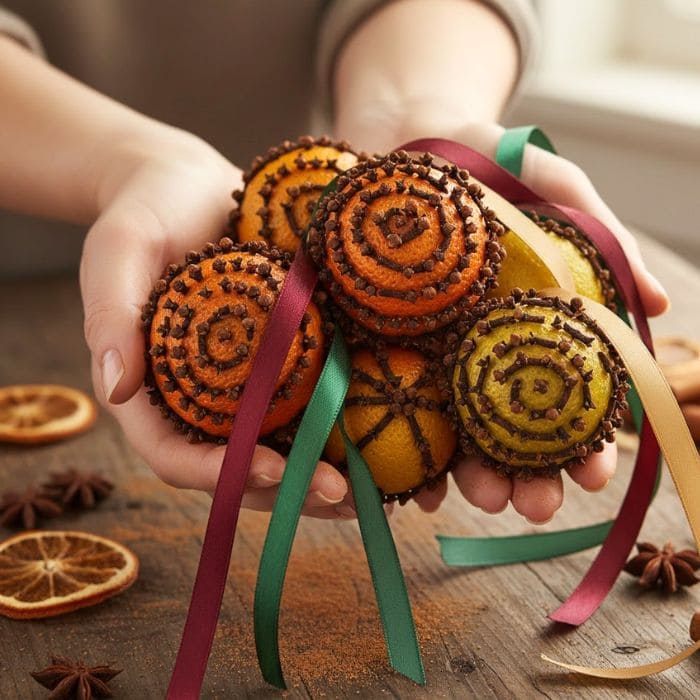
Pomander balls are made by pressing whole cloves into citrus fruit, traditionally oranges, to create a natural, long-lasting scent.
The word pomander comes from the French phrase pomme d’ambre, meaning “apple of amber,” and historically, these scented objects were carried or kept close to ward off illness, purify the air, and offer comfort during times when hygiene and fresh air were not easily accessible.
Over centuries, pomanders became associated with winter and Christmas, partly because citrus fruit was once a rare and treasured seasonal gift, and partly because the combination of orange and clove creates a scent that feels both warming and grounding.
It is sweet without being sugary, spicy without being sharp, and comforting in a way that feels familiar even if you cannot explain why.
My mom did not explain the history to me in that way. She simply said that people made them because they worked, because they lasted, and because they made a home feel alive during the darkest months of the year.
What My Mom Taught Me Without Calling It a Lesson
What stayed with me was not just the method, but her attitude. She moved slowly, pressing each clove with care, never rushing, never worrying about whether the pattern was perfect.
She told me that the orange would decide how many cloves it needed, and that the scent mattered more than symmetry.
She also said something I did not appreciate until much later, which was that scent has a way of anchoring memory more deeply than sight ever can, and that long after decorations are packed away, smell is what stays.
Here’s My Way to Make Pomander Balls
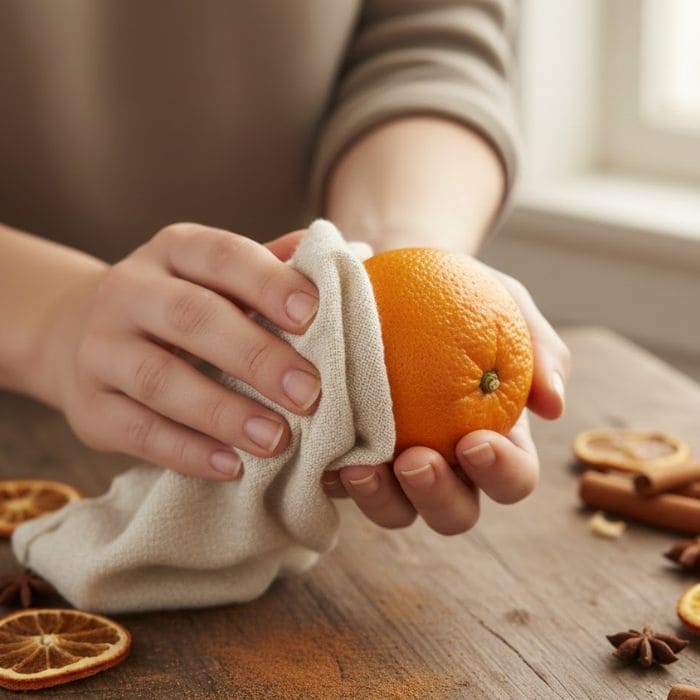
When I make pomander balls now, I look for firm, medium-sized oranges, usually about 3 to 3.5 inches in diameter, because they are easier to hold in one hand and dry more evenly than very large fruit.
Oranges that feel too soft tend to spoil rather than cure, and smaller citrus dries too quickly, losing scent before it has time to deepen.
Before starting, I wipe the skin gently with a dry cloth to remove any moisture or residue, which helps prevent mold later on.
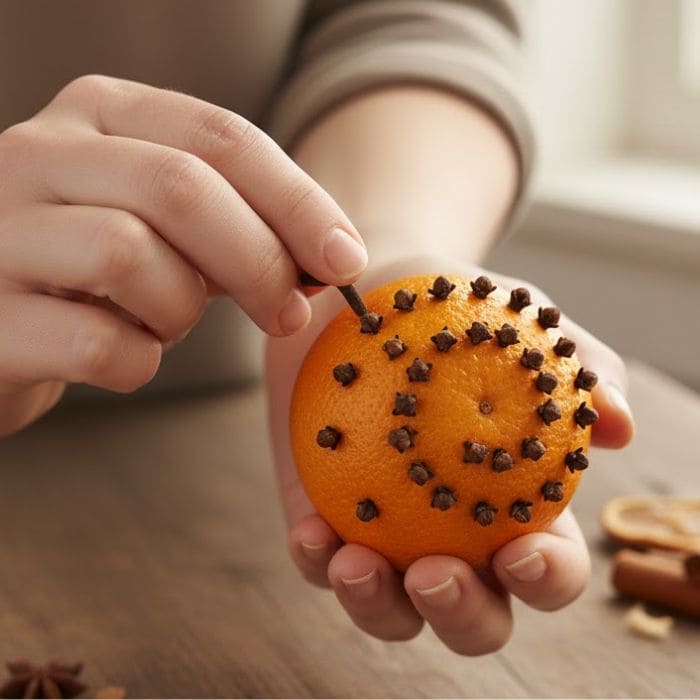
For one medium orange, I typically use between 80 and 120 whole cloves, depending on how closely I space them and how detailed the pattern becomes.
I never measure exactly. I keep a small bowl of cloves nearby and let the process guide me.
Next, I press the cloves into the peel using my fingers, sometimes using the tip of a skewer to make a tiny starter hole if the peel feels thick.
I space them evenly, leaving a small gap between each one so air can circulate as the orange dries. Pressing cloves too close together traps moisture, which is the fastest way to ruin a pomander.
As the cloves go in, the orange releases its oil, and that is when the scent truly begins, sharp at first, then slowly warming as the clove and citrus settle together.
Drying Time and How I Know They Are Ready
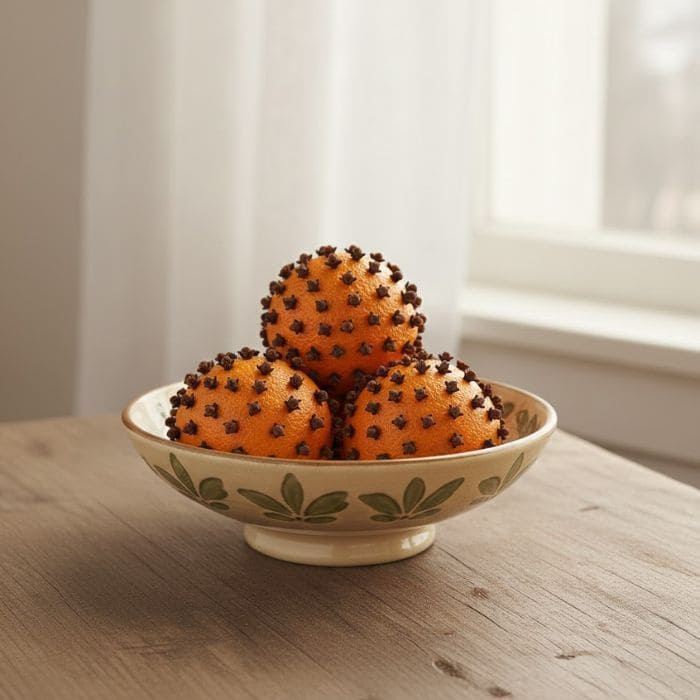
Once finished, I place the pomander balls on a plate or shallow tray in a cool, dry area with good air circulation, usually near a window but never in direct sunlight. I turn them once a day for the first few days so they dry evenly.
The drying process takes anywhere from two to four weeks, depending on humidity.
During this time, the orange slowly shrinks and hardens, while the scent becomes deeper and more rounded. My mom always said that if you rush this part, you lose the best version of the scent.
Sometimes, after the first few days, I lightly roll the pomanders in a mix of ground cinnamon and a pinch of nutmeg, which helps absorb moisture and adds warmth to the fragrance, but this step is optional and very subtle.
How I Like to Display Them Once They Are Cured
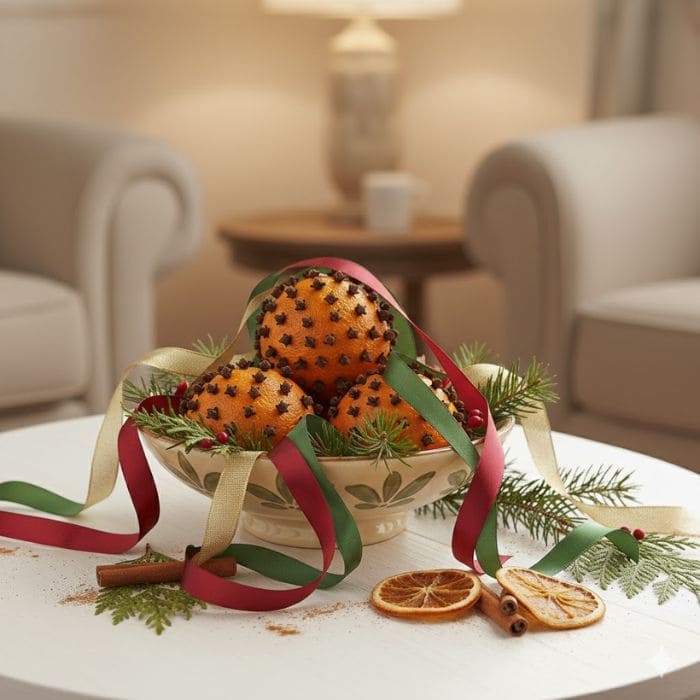
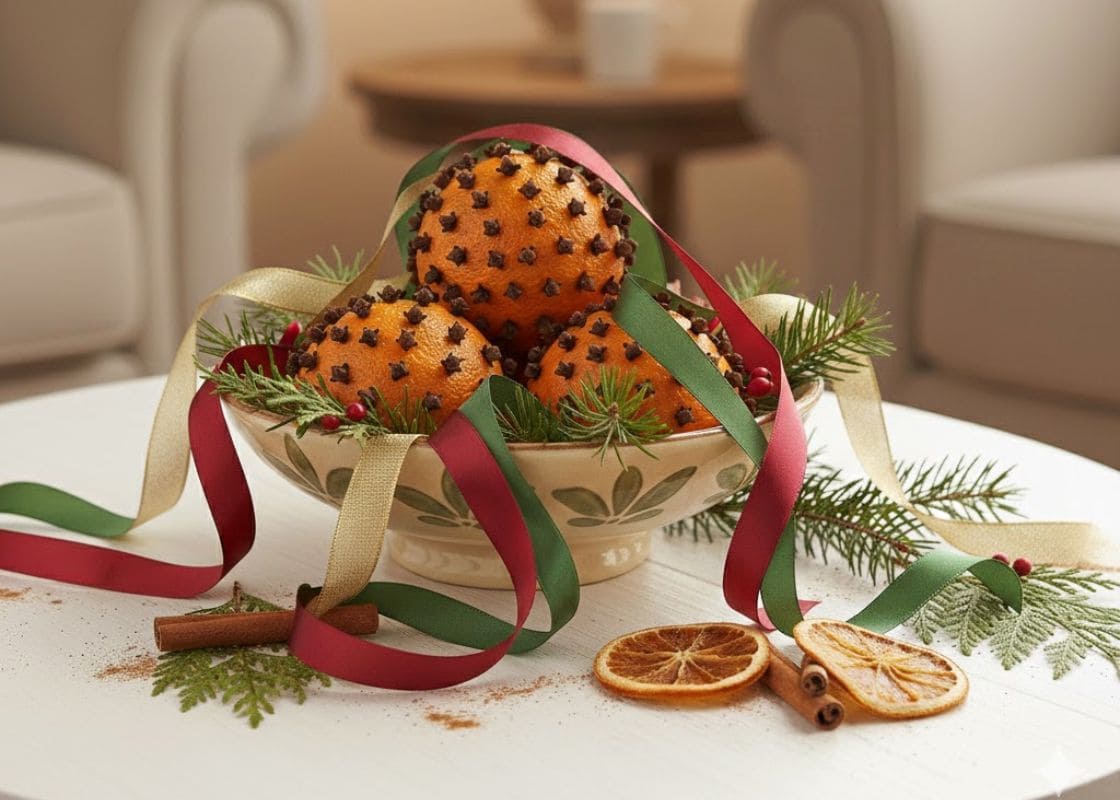
Once dried, I rarely hang pomander balls individually. I prefer grouping them in a shallow dish or bowl, letting them sit naturally among greenery.
Most often, I place them on the coffee table or dining table, where warmth from the room helps release their scent slowly throughout the day.
I usually surround them with fresh pine, cedar, or eucalyptus, depending on what I have, sometimes adding a few cinnamon sticks or bay leaves to deepen the fragrance without overwhelming it. The contrast between dark green and soft orange feels balanced and calm, never overly festive.
In smaller spaces, I place a single pomander in a bowl near the entryway or on a bedroom shelf, where the scent is noticed gradually rather than all at once.
I Keep Making Them Every Year
Every year, when I press the cloves into the orange again, I realize I am doing more than repeating a tradition. I am creating a pause, a small ritual that marks the season without demanding attention.
As Christmas approaches again, I know I will make pomander balls just as my mom once did, pressing cloves slowly, letting the scent build naturally, and placing them somewhere they can be noticed without being announced.
When the holidays pass, there will still be a faint trace of orange and clove in the air, reminding me that some traditions are not meant to last forever, only long enough to make the season feel warm.
And that, to me, is enough.