For a long time, I thought rugs had one clear purpose. They belonged on the floor, anchoring furniture and warming cold surfaces.
Living in a rental changed that assumption completely. When walls cannot be painted freely and furniture must work harder to justify its footprint, soft materials become more than decoration, they become tools.
Over time, I realized rugs were some of the most flexible pieces in my home. They carry texture, pattern, and warmth, but they also adapt easily without causing damage.
I started using them in ways that felt less expected and more personal, and they ended up shaping the mood of my space more than almost anything else.
1. Hanging a Rug on the Wall to Add Warmth Without Paint
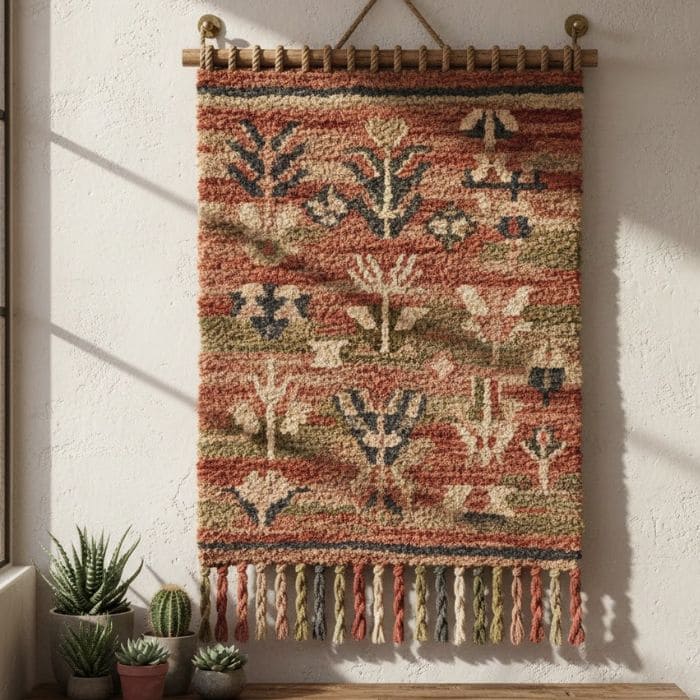
The first time I hung a rug on the wall, it was not meant to be a design statement. It was a response to a wall that felt too bare and too cold, especially during the long Washington winters when light stays soft and muted.
I wanted something that could add warmth without committing to paint, wallpaper, or anything permanent.
So the rug I chose was medium-sized, roughly 3 by 5 feet, with a woven texture and muted, earthy tones. Nothing bold or loud. The pattern was subtle, inspired by traditional designs, but softened by age and wear.
When I hung it, the wall immediately felt quieter and more grounded, as if it had absorbed sound and light at the same time.
This idea aligns closely with what Ilse Crawford writes about in “The Sensual Home”, where she explains that textiles on walls add emotional warmth because they engage more than just sight. A rug on the wall changes how a room sounds and feels, not just how it looks.
From a practical perspective, hanging a rug also hides uneven walls and past paint touch-ups common in rentals.
I used a simple wooden rod and removable hooks, which allowed the rug to hang naturally without stretching or damage.
My personal tip: Choose rugs with texture rather than high contrast. Texture softens a space. Bold patterns demand attention and can overwhelm a wall quickly, especially in smaller rooms.
2. Using a Rug in the Living Room to Define Space Without Closing It In
In my living room, the rug does more than decorate the floor. It defines the room itself.
Because my home is not large, I needed a way to create structure without adding furniture that would make the space feel crowded.
The rug I use here is large enough that at least the front legs of my sofa and chairs sit comfortably on it. That detail matters.
A rug that is too small feels like an afterthought, while one that is properly scaled makes the room feel intentional and calm.
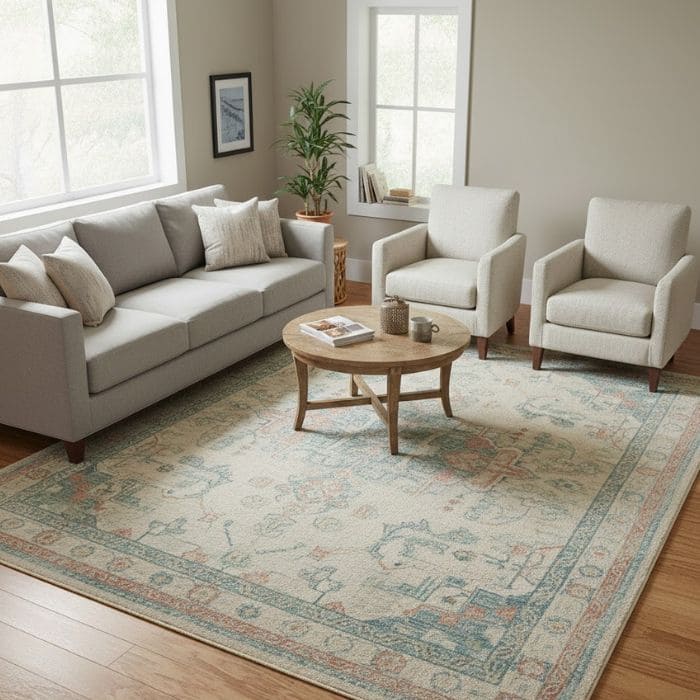
I chose a rug with a low pile and soft, washed colors that respond well to Washington’s shifting light. In the morning, it looks cooler and more muted.
By afternoon, it warms slightly as light moves through the room. That adaptability matters in a place where the weather changes often.
In rentals, rugs are one of the easiest ways to control color without painting. If your walls are neutral or imperfect, let the rug carry the tone and personality of the room instead.
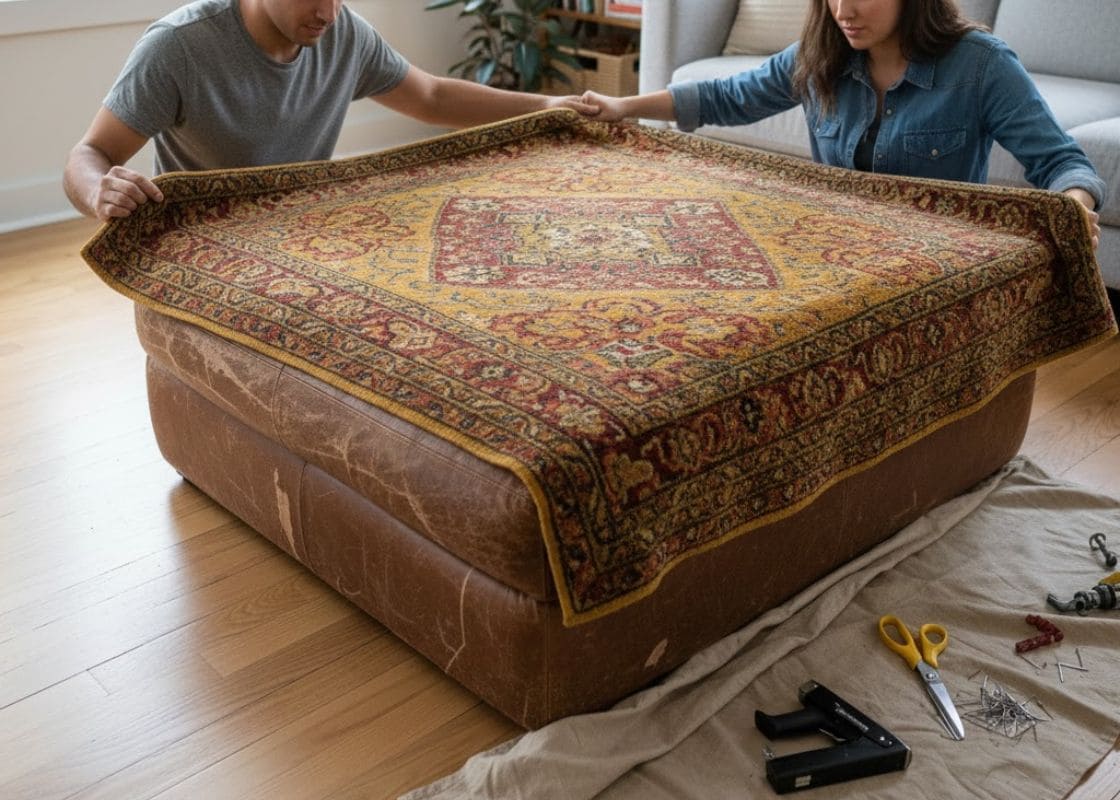
3. Covering an Ottoman With a Rug to Create a New Piece
This idea came from a place of quiet frustration rather than inspiration. I had an ottoman that was structurally fine but visually tired.
The fabric had faded slightly, and the color no longer worked with the rest of the room. Reupholstering felt like too much commitment for a rental, and replacing it felt unnecessary. That was when I realized I already had the solution folded away in a closet.
The rug I chose was smaller, roughly 2 by 3 feet, with enough weight to drape naturally but not so thick that it became stiff.
Texture mattered more than pattern here. A rug with some body holds its shape better and does not slide every time you sit down.
Step One: Choosing the Right Rug for the Job
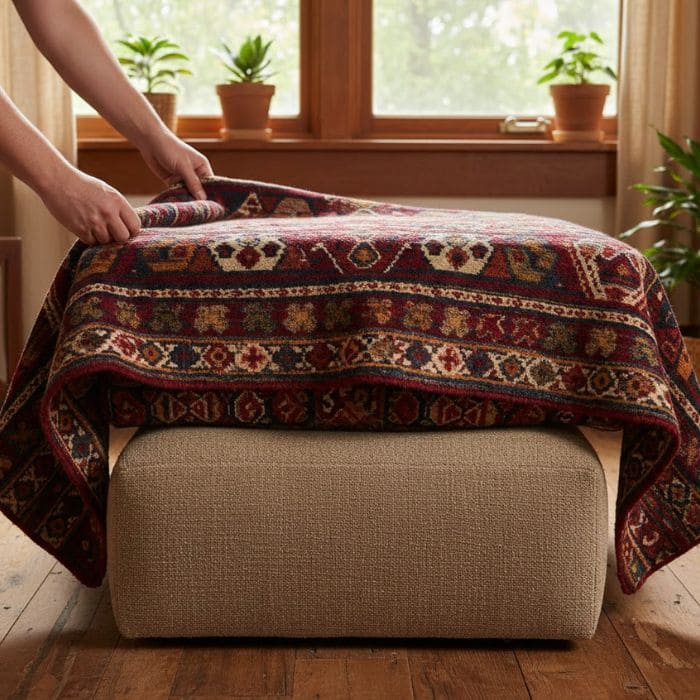
Before placing anything, I laid the rug flat on the floor and studied it. I looked at how the pattern flowed, where the edges felt strongest, and which side felt like it wanted to face outward.
This step matters more than people expect. Rugs often have a natural direction, and letting that guide you makes the result feel intentional instead of improvised.
For beginners, I always recommend choosing a rug with a tighter weave and some weight. Very thin or slippery rugs tend to bunch and move, especially if the ottoman is used daily.
Step Two: Centering the Rug Without Overthinking It
I placed the rug directly over the ottoman and adjusted it slowly until it felt balanced. I did not aim for perfect symmetry. Instead, I looked for visual calm. The rug should feel settled, not stretched or forced into position.
I let the rug drape naturally over the sides, allowing the corners to fall where they wanted. That looseness is what makes the piece feel relaxed rather than staged.
A small tip I learned through trial is to stand back several times while adjusting. What feels centered up close often looks different from across the room.
Step Three: Securing Without Making It Permanent
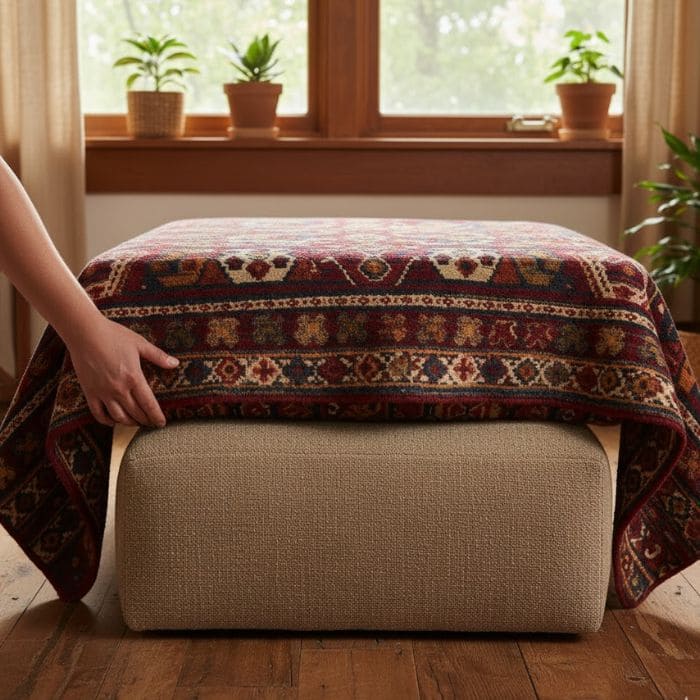
Because this is a rental, I avoided anything permanent.
I used double-sided fabric tape in a few discreet spots underneath, just enough to keep the rug from sliding, but not so much that it damaged either surface. This kept the rug in place while still allowing me to remove or adjust it later.
Some people prefer tucking the rug underneath the ottoman if the base allows it. That works too, but only if the ottoman design supports it. In my case, a few hidden tape points were enough.
Step Four: Adjusting for Daily Use
After sitting on the ottoman a few times, I noticed where the rug shifted slightly and made small adjustments. This part is important. Living with the piece reveals things styling alone cannot.
Once adjusted, the rug stayed surprisingly stable. The ottoman felt refreshed, layered, and more connected to the rest of the room.
What had once felt like a mismatched piece now felt intentional, almost collected.
A Final Tip From Experience
If you are new to this, start with a rug you already own. Do not buy something specifically for this until you see how it works in your space.
Rugs behave differently depending on light, furniture shape, and how you use the room.
This small change taught me that sometimes, the best updates are not about replacing things, but about seeing them differently.